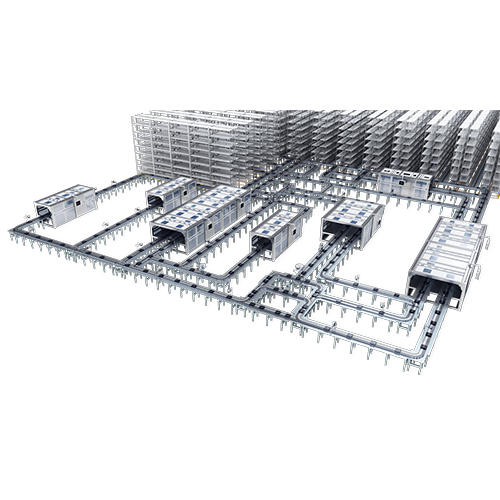
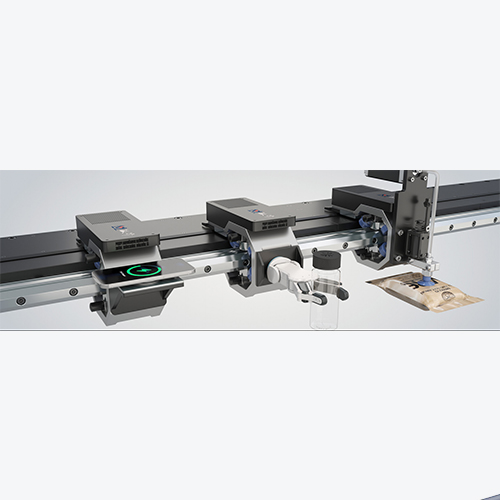
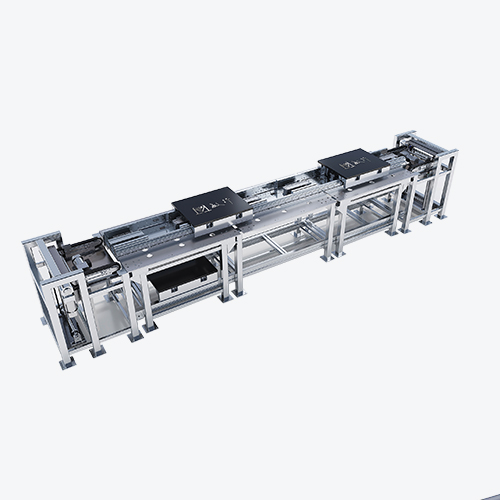
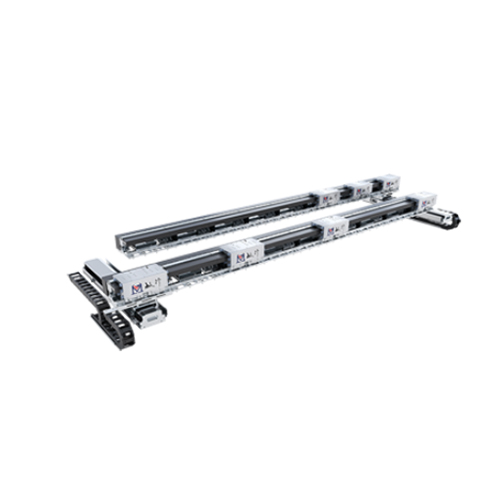
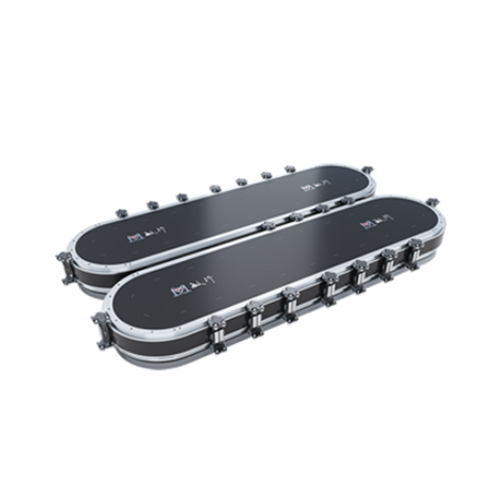
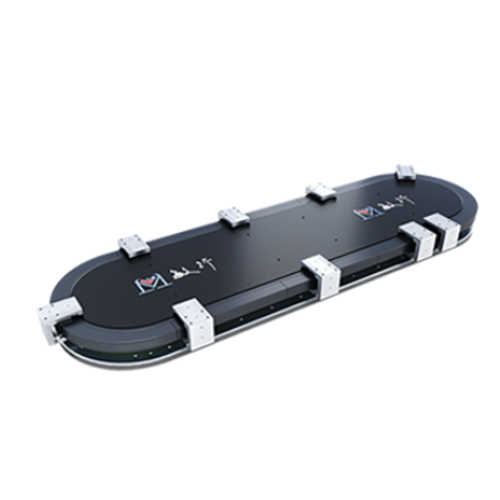
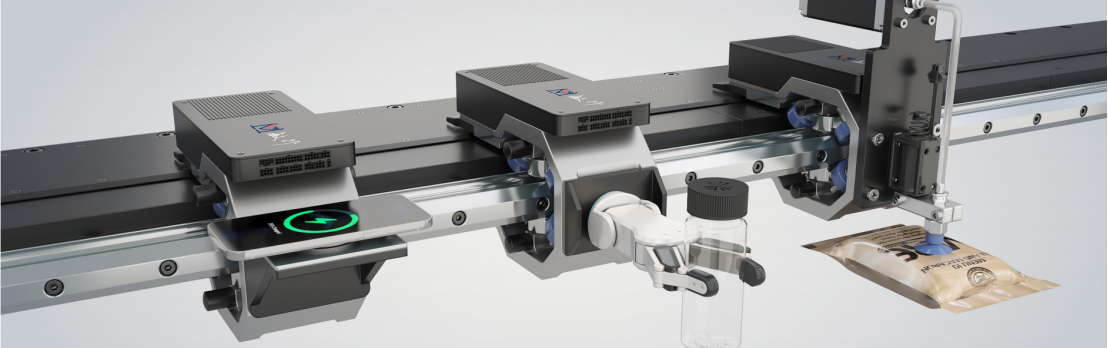
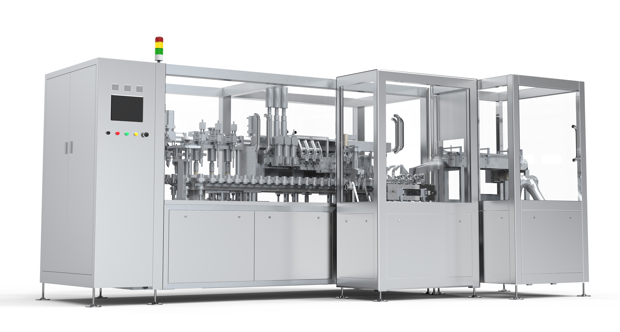
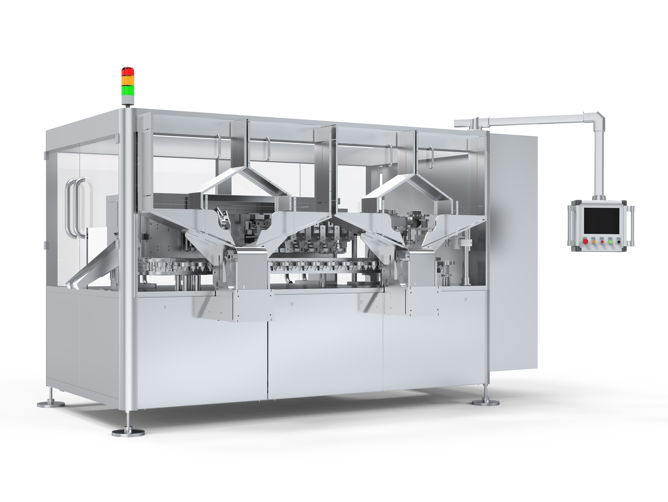
1、Compact size, can be integrated into the interior of equipment.
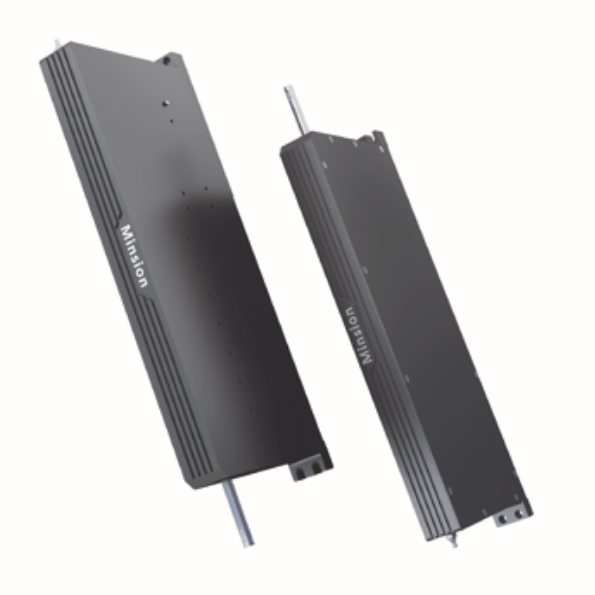
2、U-shaped structure design with upper and lower magnets for balanced magnetic attraction, eliminating additional burden on roller guide rails. Stator height and width ≤ 100mm, track radius 175mm—compact structure.
3、 Mover center-to-center distance of 80mm enables denser mover arrangement.
*The following content is generated by AI and is for reference only.
The device in question is a specialized automated transport system designed for high-precision material handling within industrial environments. Utilizing advanced magnetic levitation technology, it eliminates physical contact between the moving platform and the guide rail, thereby achieving frictionless motion. This unique mechanism allows for ultra-smooth acceleration and deceleration, making it ideal for applications requiring extreme accuracy, such as semiconductor manufacturing, optical assembly, and delicate pharmaceutical processing. The system typically operates on a linear motor principle, where electromagnetic forces propel the carriage along a fixed track without mechanical wear components like belts or gears.
Due to its sensitivity to environmental factors, strict operational protocols must be followed. First, the installation area must maintain a controlled temperature and humidity level to prevent condensation, which could compromise the magnetic coils or electronic sensors. Second, the workspace should be kept free from ferromagnetic debris, as stray metal objects can interfere with the magnetic field and cause sudden stoppages or positioning errors. Regular calibration of the position sensors is essential to ensure long-term reliability, especially after any significant vibration events or power fluctuations.
Safety is paramount when operating this equipment. Although the system runs at low surface temperatures compared to traditional conveyors, the strong magnetic fields generated require caution around individuals with pacemakers or those carrying magnetic storage media. Emergency stop mechanisms are standard, but operators must never attempt to manually override the locking magnets while the system is powered. Furthermore, routine maintenance should focus on cleaning the guideway surfaces to remove dust accumulation that might affect sensor readings. By adhering to these guidelines, facilities can maximize the lifespan of the unit while benefiting from its superior speed, precision, and cleanliness, ultimately enhancing overall production efficiency and product quality in demanding automation scenarios.






 (All Rights Reserved)