Product Description
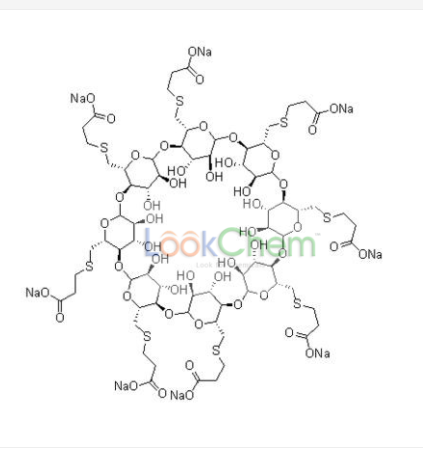
Product Name: Sodium Gluconate Sodium
CAS: 343306-79-6
Molecular formula: C72H104O48S8.8Na
Molecular weight: 2178.01
AI Product Description
*The following content is generated by AI and is for reference only.
The compound referred to as "6A,6B,6C,6D,6E,6F,6G,6H-Octakis-S" is a highly specialized chemical species, most likely representing an octa-substituted derivative of a cyclic or cage-like macrocycle where eight sulfur atoms have been incorporated at the 6-position. While specific commercial databases often list this under complex nomenclature related to functionalized calixarenes, cyclodextrins, or sulfur-rich dendrimers, it is crucial to note that a direct match for this exact string in standard CAS registries may yield ambiguous results due to potential typos or proprietary naming conventions used by niche research laboratories. In the context of advanced materials science, such a structure typically implies a molecule with enhanced electron-donating capabilities and unique coordination chemistry properties derived from its multiple thiol or sulfide groups.
This class of compounds finds significant application in the fields of supramolecular chemistry, heavy metal remediation, and catalysis. The abundance of sulfur sites makes the molecule an exceptional chelating agent capable of binding soft metal ions like mercury, lead, and silver with high affinity. Consequently, it is utilized in environmental technologies for water purification systems designed to remove toxic heavy metals from industrial effluents. Furthermore, in nanotechnology, these sulfur-rich scaffolds serve as precursors for synthesizing novel inorganic-organic hybrid materials or as ligands in the formation of stable metal-organic frameworks (MOFs). Their structural rigidity and tunable electronic properties also suggest potential utility in molecular electronics and as building blocks for drug delivery systems targeting specific cellular receptors. Researchers frequently employ such derivatives to investigate host-guest interactions, leveraging the cavity formed by the eight substituted positions to encapsulate small organic molecules or ions. Despite the complexity of its synthesis, which often requires multi-step protection-deprotection strategies involving sulfur chemistry, the resulting material offers distinct advantages over conventional monodentate ligands due to its multidentate nature. Continued study of this compound promises breakthroughs in selective separation technologies and the development of next-generation functional polymers with tailored reactivity profiles.





 (All Rights Reserved)