Our skilled professionals formulate these compounds by making use of various ingredients and chemicals available in the market.
We formulate these drugs in our using latest equipment therefore these medicines have longer shelf life and are very effective.
DX-8951 derivative is available in various specifications to meet our clients' demands.
*The following content is generated by AI and is for reference only.
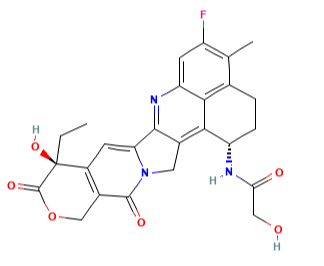
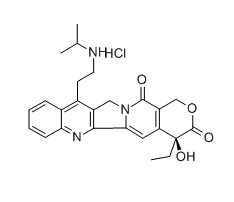
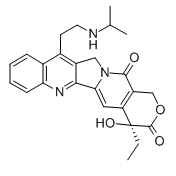
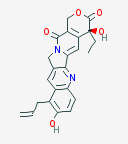
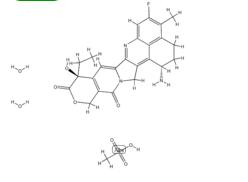
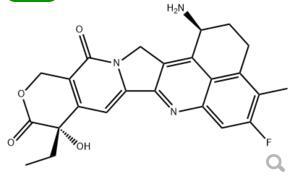
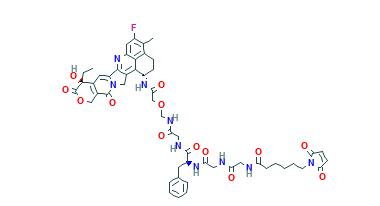
The term "DX-8951 derivative" refers to a class of compounds derived from DX-8951, commonly known as Exatecan (or its mesylate salt, DX-8951f). This investigational anticancer agent is a potent topoisomerase I inhibitor belonging to the camptothecin family. While specific derivatives may vary in chemical structure depending on the research context, they generally share the core tricyclic quinoline scaffold characteristic of this drug class, designed to enhance stability and pharmacokinetic properties compared to earlier generation camptothecins like irinotecan or topotecan.
Regarding specific molecular data, the parent compound DX-8951 has the molecular formula C23H24N2O6 and a CAS number of 207453-66-3 for the free base form. Derivatives typically involve modifications at the C-20 position or the side chain to improve water solubility and reduce lactone ring instability, which is a common limitation of camptothecins. Consequently, exact CAS numbers and formulas for specific derivatives are not universally standardized and depend entirely on the specific structural alteration performed by researchers. These compounds are primarily utilized in preclinical oncology research to target rapidly dividing cancer cells. Their mechanism of action involves stabilizing the DNA-topoisomerase I cleavable complex, thereby preventing DNA religation and inducing double-strand breaks during replication, ultimately leading to apoptosis.
Current applications focus on overcoming resistance mechanisms observed with first-generation agents and improving therapeutic indices through targeted delivery systems. Although some derivatives have shown promise in clinical trials for solid tumors such as colorectal, ovarian, and lung cancers, widespread commercial availability remains limited as many remain in experimental stages. Researchers utilize these molecules to explore structure-activity relationships (SAR) aimed at maximizing cytotoxicity while minimizing systemic toxicity. The development of stable DX-8951 analogs represents a significant effort in medicinal chemistry to refine topoisomerase inhibition strategies. Due to their potent biological activity, handling requires strict safety protocols. As research evolves, new derivatives continue to emerge, offering potential future solutions for refractory malignancies where standard therapies have failed.






 (All Rights Reserved)