Product Description
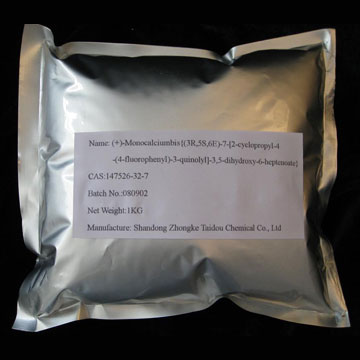
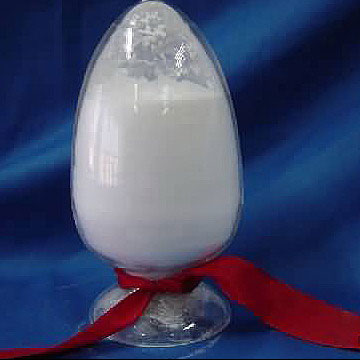
Product introduction: Chemical name: (+)-monocalciumbis{(3R,5S,6E)-7-[2-cyclopropyl-4-(4-fluorophenyl)-3-quinolyl]-3,5-dihydroxy-6-heptenoate} Molecular formular: [C25H23FNO4]2CaMolecular weight: 880.98 CAS: 147526-32-7Property: White or off white powder Specific Rotation +24-+27° Relation substance ≤1.0% Isomer ≤1.0% Loss in dry ≤2.0% Heavy metal ≤0.002% Assay ≥98.5%
AI Product Description
*The following content is generated by AI and is for reference only.
Pitavastatin Calcium is a potent third-generation statin, chemically known as 1H-pyridine-2-carboxylic acid, 3,5-dihydroxy-6-[2-(4-fluorophenyl)-5-isopropyl-3-phenyl-4-[(phenylamino)carbonyl]-2(1H)-pyridinyl]heptanoate calcium salt. Its molecular formula is C28H27CaFNO6, with a CAS number of 203979-62-8. As a selective HMG-CoA reductase inhibitor, it functions by competitively blocking the enzyme responsible for cholesterol synthesis in the liver, thereby significantly reducing low-density lipoprotein (LDL) cholesterol and triglyceride levels while modestly increasing high-density lipoprotein (HDL) cholesterol.
Unlike some earlier generation statins, Pitavastatin exhibits high affinity for HMG-CoA reductase and demonstrates minimal interaction with cytochrome P450 enzymes, particularly CYP3A4. This unique pharmacokinetic profile reduces the risk of drug-drug interactions, making it a favorable option for patients on complex polypharmacy regimens. It is primarily indicated for the treatment of primary hyperlipidemia and mixed dyslipidemia in adults, often used as an adjunct to diet and lifestyle modifications. Clinical studies have shown its efficacy in lowering LDL-C levels comparable to or superior to other statins at lower doses. Furthermore, emerging research suggests potential pleiotropic effects, including anti-inflammatory properties and stabilization of atherosclerotic plaques, which may contribute to cardiovascular risk reduction beyond lipid management alone. The calcium salt form ensures optimal solubility and bioavailability. While generally well-tolerated, common side effects may include headache, myalgia, and transient elevations in liver enzymes. Due to its metabolic stability and lack of significant hepatic metabolism via CYP pathways, Pitavastatin represents a valuable therapeutic tool in modern lipid-lowering strategies, offering clinicians a flexible alternative for managing hypercholesterolemia with a potentially improved safety profile regarding concomitant medication use.





 (All Rights Reserved)
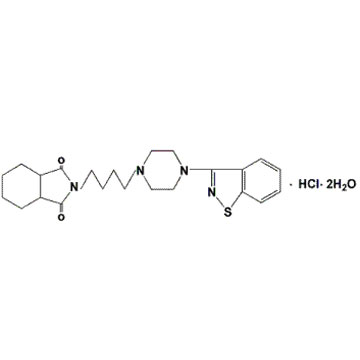




![N-[3-Fluoro-4-[6-(2-methyl-2H-tetrazol-5-yl)-3-pyridinyl]phenyl]carbamic acid phenylmethyl ester](https://eimg.pharmasources.com/img_Cphi_en/Product/2018_08/Mimg_1808171123640937.jpg)