Product Description
AI Product Description
*The following content is generated by AI and is for reference only.
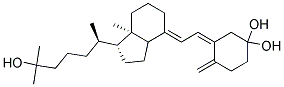
Secalciferol, chemically known as 1,25-dihydroxyvitamin D3 or calcitriol, is the biologically active form of vitamin D. Its molecular formula is C27H44O3, and it carries the CAS Registry Number 32222-06-3. This potent hormone plays a critical role in regulating calcium and phosphorus homeostasis within the human body. Unlike its precursor forms found in food or synthesized by the skin under sunlight, Secalciferol does not require further hepatic or renal hydroxylation to become active; it directly binds to nuclear vitamin D receptors (VDR) in target tissues to modulate gene expression.
Clinically, Secalciferol is primarily utilized for the treatment and management of hypocalcemia associated with chronic kidney disease, particularly in patients undergoing dialysis. In these individuals, the kidneys often fail to convert inactive vitamin D into its active form, leading to severe mineral imbalances. By administering Secalciferol, physicians can effectively restore normal serum calcium levels, thereby preventing complications such as secondary hyperparathyroidism, bone demineralization, and renal osteodystrophy. Furthermore, it serves as a therapeutic agent for hypoparathyroidism and vitamin D-dependent rickets type I, conditions characterized by an inability to produce sufficient active vitamin D.
Beyond its endocrine functions, research suggests potential roles in cell differentiation and immune modulation, although these applications remain largely investigational. The drug is typically administered orally or intravenously, with dosing carefully titrated based on individual patient response and serum calcium monitoring to avoid toxicity. Due to its narrow therapeutic index, precise dosage control is essential to prevent hypercalcemia, which can lead to nausea, vomiting, weakness, and renal damage. Secalciferol remains a cornerstone therapy in nephrology and endocrinology, offering a life-saving intervention for patients with impaired vitamin D metabolism. Its availability in various formulations ensures flexibility in clinical settings, making it indispensable for maintaining skeletal health and metabolic balance in vulnerable populations worldwide.



 (All Rights Reserved)





![4-[[[[6-[(Diethylamino)methyl]-2-naphthalenylmethoxy]carbonyllaminolbenzoic acid](https://eimg.pharmasources.com/image/20241206/xJCFsdgfMrHzqjtgeOixhGQHgVbKi7kAcoEqemzE.jpg)