3-Amino-2,6-piperidinedione hydrochloride
CAS NO. 24666-56-6
Alias:Lenalidomide Intermediate
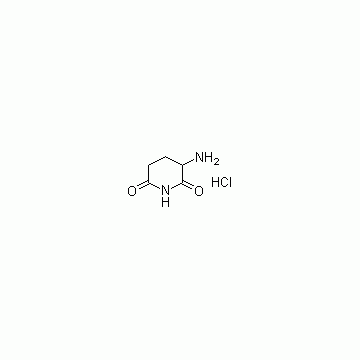
Chemical name:3-Amino-2,6-piperidinedione hydrochloride
Product code:B-A038-1
Molecular formula:C5H9ClN2O2
Molecular weight: 164.59
Content:≧99.0%
Description:White crystalline powder
Storage:Be kept airtight,and dry, in cool place
Packing specification:According to the customer request
*The following content is generated by AI and is for reference only.
3-Amino-2,6-piperidinedione hydrochloride is a specialized organic compound primarily utilized in the fields of medicinal chemistry and pharmaceutical research. With the molecular formula C5H9ClN2O2 and a CAS number of 100438-76-8, this substance represents a key intermediate in the synthesis of complex heterocyclic structures. The molecule features a piperidine-2,6-dione core, commonly known as a glutarimide ring, which is heavily substituted with an amino group at the third position and stabilized as a hydrochloride salt to enhance its solubility and stability for laboratory handling.
The primary application of 3-amino-2,6-piperidinedione hydrochloride lies in the development of novel therapeutic agents. It serves as a crucial building block for constructing various bioactive molecules, including potential antiviral drugs, antifungal compounds, and anti-inflammatory agents. The glutarimide scaffold is particularly notable for its biological activity; derivatives of this structure have demonstrated significant potency against specific viral enzymes and fungal pathogens. By introducing the amino functionality at the 3-position, chemists can further modify the electronic and steric properties of the final drug candidate, allowing for precise tuning of pharmacokinetic profiles.
In industrial settings, this reagent is employed by process chemists to optimize synthetic routes for high-value active pharmaceutical ingredients (APIs). Its hydrochloride form ensures that the material remains stable under standard storage conditions while facilitating easier purification steps during multi-step syntheses. Researchers frequently utilize this compound in structure-activity relationship (SAR) studies to understand how specific structural modifications influence biological efficacy. While not typically available as a finished consumer product, it is a vital tool for academic laboratories and biotechnology firms dedicated to advancing drug discovery pipelines. Safety protocols must be strictly followed when handling this chemical, as with many nitrogen-containing heterocycles, ensuring proper ventilation and personal protective equipment are used to prevent inhalation or skin contact. Ultimately, 3-amino-2,6-piperidinedione hydrochloride stands as a foundational component in the modern quest for more effective and targeted medical treatments.





 (All Rights Reserved)

![N-[3-Fluoro-4-[6-(2-methyl-2H-tetrazol-5-yl)-3-pyridinyl]phenyl]carbamic acid phenylmethyl ester](https://eimg.pharmasources.com/img_Cphi_en/Product/2018_08/Mimg_1808171123640937.jpg)