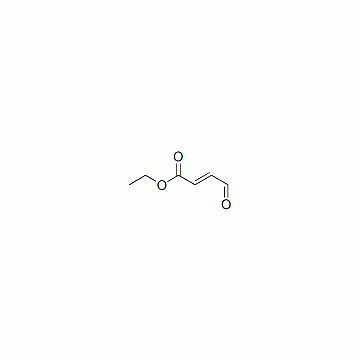
Product Description
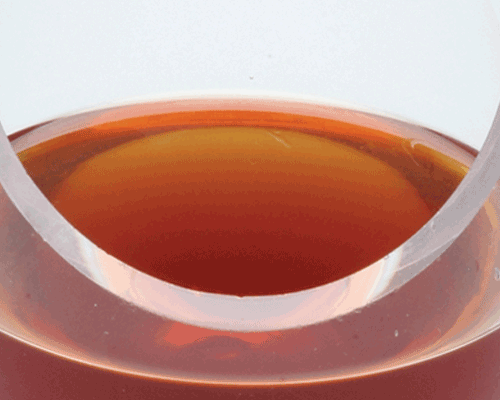
99% Appearance:colorless to slightly yellow oily liquid
Mainly used in the synthesis of pesticide, medicines, dyes and other organic substances
200kg steel-plastic composite drum.
CAS NO.: 100-63-0
Molecular Formula: C6H8N2
Molecular Weight: 108.14
AI Product Description
*The following content is generated by AI and is for reference only.
High-Class 92% Phenylhydrazine is a specialized organic reagent widely utilized in industrial chemistry and pharmaceutical synthesis. With a purity level of 92%, this grade ensures consistent performance for applications requiring high reliability while maintaining cost-effectiveness compared to ultra-pure grades. The chemical formula of phenylhydrazine is C6H8N2, and it is identified by the CAS number 100-63-0. Structurally, it consists of a benzene ring attached to a hydrazine group, making it a versatile intermediate in various synthetic pathways.
This compound is primarily employed as a key building block in the manufacture of dyes, pigments, and photographic developing agents. Its most notable application lies in the formation of osazones, which are crucial for identifying and characterizing reducing sugars in carbohydrate chemistry. In the pharmaceutical industry, phenylhydrazine derivatives serve as essential precursors for synthesizing sulfa drugs, antimalarials, and other heterocyclic compounds containing pyrazole or indole rings. Furthermore, it plays a significant role in the production of agrochemicals, including herbicides and insecticides, where its reactive nitrogen atoms facilitate complex molecular transformations.
Handling High-Class 92% Phenylhydrazine requires strict adherence to safety protocols due to its potential toxicity and flammability. It can be absorbed through the skin and may cause hemolytic anemia upon exposure. Therefore, appropriate personal protective equipment, including gloves, goggles, and respirators, must be worn during processing. Storage should occur in cool, dry, well-ventilated areas away from oxidizers and strong acids to prevent hazardous reactions. While lower purity grades might suffice for bulk industrial processes, the 92% specification offers an optimal balance between reactivity control and economic efficiency for large-scale manufacturing. Manufacturers and researchers rely on this specific grade to ensure reproducible results in both laboratory experiments and commercial production lines. As a fundamental chemical intermediate, its continued availability supports innovation across multiple sectors of the global chemical economy, bridging the gap between basic research and applied industrial technology.





 (All Rights Reserved)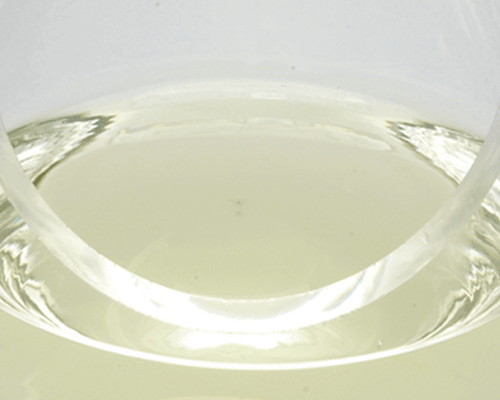

![4-[[[[6-[(Diethylamino)methyl]-2-naphthalenylmethoxy]carbonyllaminolbenzoic acid](https://eimg.pharmasources.com/image/20241206/xJCFsdgfMrHzqjtgeOixhGQHgVbKi7kAcoEqemzE.jpg)