Product Description
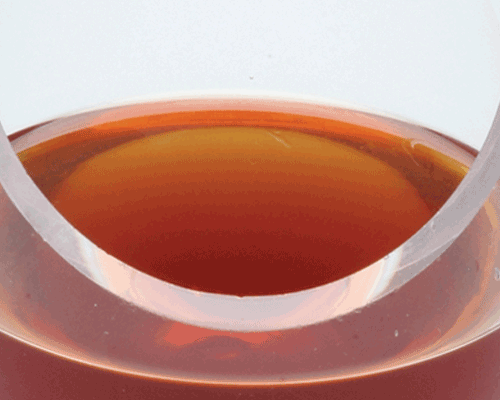
Appearance:colorless to slightly yellow oily liquid Mainly used in the synthesis of pesticide, medicines, dyes and other organic substances 200kg steel-plastic composite drum. CAS NO.: 100-63-0 Molecular Formula: C6H8N2 Molecular Weight: 108.14
AI Product Description
*The following content is generated by AI and is for reference only.
Phenylhydrazine, commercially available in a 92% purity grade, is a vital organic compound widely utilized across various industrial and laboratory sectors. With the chemical formula C6H8N2 and the CAS registry number 100-63-0, this substance appears as a colorless to pale yellow liquid that darkens upon exposure to light and air. It possesses a distinct ammonia-like odor and is highly soluble in water, ethanol, and ether, making it an excellent reagent for diverse chemical syntheses.
The primary application of phenylhydrazine lies in carbohydrate chemistry, where it serves as a key reagent for forming osazones from reducing sugars. This reaction is fundamental for identifying and characterizing monosaccharides such as glucose and fructose in analytical laboratories. Beyond sugar analysis, it plays a crucial role in the synthesis of heterocyclic compounds, particularly indoles, pyrazoles, and quinolines, which are essential building blocks for pharmaceuticals and agrochemicals. In the dye industry, it acts as an intermediate for producing azo dyes and pigments used in textiles and plastics. Additionally, it is employed in the manufacturing of certain drugs, including antipyretics and analgesics.
Handling this chemical requires strict safety protocols due to its toxicity. Phenylhydrazine is toxic if ingested, inhaled, or absorbed through the skin, and it can cause methemoglobinemia and liver damage. It is also considered a potential carcinogen and mutagen. Therefore, storage must be conducted in tightly sealed containers away from light, oxidizers, and strong acids to prevent decomposition or hazardous reactions. Proper personal protective equipment, including gloves, goggles, and respirators, is mandatory during manipulation. Despite its hazards, 92% phenylhydrazine remains an indispensable tool in organic synthesis and analytical chemistry, driving innovation in drug discovery and material science when handled with appropriate caution and expertise.



 (All Rights Reserved)
![6,8-Dioxo-5,7-diazaspiro[3.4]octane-2-carboxylic acid](https://eimg.pharmasources.com/image/product/20250403/02effeb5a7639bc84ff1f3add3c0c64fjpg)
![8-Oxa-1,3-diazaspiro[4.5]decane-2,4-dione](https://eimg.pharmasources.com/image/product/20250403/60fa7223d5a34f24138486ceea0ffb15jpg)
![8,16-Diazadispiro[6.1.6.2]heptadecan-17-one](https://eimg.pharmasources.com/image/product/20250403/ca91cba8b87e53fc879f8d8764873a40jpg)