Product Description
High purity of maropitant
AI Product Description
*The following content is generated by AI and is for reference only.
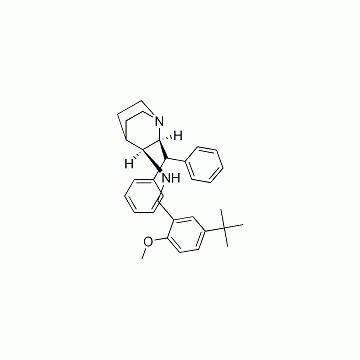
Maropitant, commercially known as Cerenia, is a potent neurokinin-1 (NK1) receptor antagonist widely utilized in veterinary medicine. Its primary chemical identity is defined by the molecular formula C26H30ClN5O4 and the CAS number 198391-63-6. Structurally, it belongs to the class of substituted benzamides, designed specifically to block the binding of substance P, a neuropeptide responsible for transmitting pain and nausea signals within the central nervous system.
The drug is indicated for the prevention and treatment of vomiting in dogs and cats. In canines, it effectively manages acute vomiting associated with motion sickness when administered orally or via injection prior to travel. It is also approved for controlling vomiting related to various gastrointestinal disorders, including those caused by heat stress or dietary indiscretion. For feline patients, maropitant serves as a crucial therapeutic agent for acute vomiting and is often employed to prevent emesis following surgical procedures. The medication demonstrates high bioavailability and rapid onset of action, making it suitable for both acute clinical settings and home care protocols.
Pharmacologically, maropitant crosses the blood-brain barrier efficiently to act on the vomiting center in the brainstem. Unlike some older antiemetics, it does not rely on dopamine blockade, thereby minimizing side effects such as sedation or extrapyramidal symptoms commonly seen with phenothiazines. While generally well-tolerated, potential adverse reactions may include transient salivation, diarrhea, or local irritation at the injection site. Dosage varies based on species, weight, and the specific condition being treated, necessitating strict adherence to veterinary guidelines.
As a cornerstone in modern small animal practice, maropitant has significantly improved patient comfort and recovery outcomes. Its versatility allows veterinarians to manage complex cases involving severe dehydration or post-operative nausea with greater efficacy. Continuous research supports its safety profile across different age groups, though caution is advised for animals with pre-existing liver conditions. Ultimately, maropitant represents a critical advancement in veterinary pharmacology, offering reliable control over emetic reflexes and enhancing the quality of life for companion animals suffering from gastrointestinal distress.






 (All Rights Reserved)