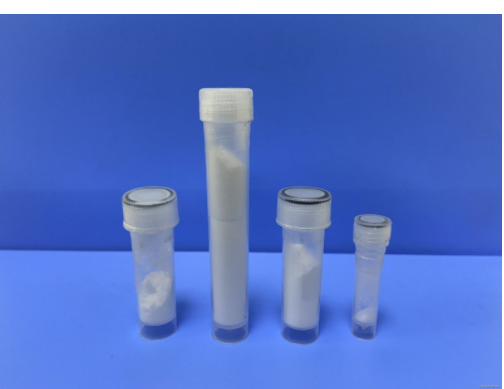
Product Description
Hangzhou Go Top Peptide Biotech Co., Ltd. is a national high-tech enterprise specializing in the research and development and production of peptides and related derivatives. It provides peptide-related custom synthesis and technology for domestic and foreign medical research and development, biotechnology, universities and scientific research institutions service. For consultation or ordering, please contact:86-571-88211951, 86-13588827304 (Cindy Mei), sales10@gotopbio.com
AI Product Description
*The following content is generated by AI and is for reference only.
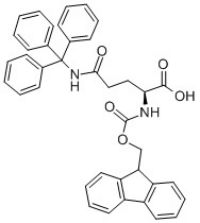
Fmoc-Gln(Trt)-OH is a specialized protected amino acid derivative widely utilized in solid-phase peptide synthesis (SPPS) and medicinal chemistry research. Chemically known as N-Fmoc-L-glutamine trityl, this compound features an Fmoc (9-fluorenylmethoxycarbonyl) group on the alpha-amino position and a trityl (triphenylmethyl) group protecting the side-chain amide of glutamine. The molecular formula is C32H31NO5, with a corresponding CAS number of 104687-58-7. Its molecular weight stands approximately at 513.6 g/mol.
The primary utility of Fmoc-Gln(Trt)-OH lies in its ability to prevent unwanted side reactions during peptide assembly. In standard SPPS protocols using the Fmoc strategy, the alpha-amino group is temporarily masked by the base-labile Fmoc group, allowing for stepwise elongation under mild basic conditions. Crucially, the trityl protection on the glutamine side chain ensures that the reactive amide nitrogen does not participate in acylation or cyclization reactions that could lead to deletion sequences or complex byproducts. This specific protection scheme is essential when synthesizing peptides containing multiple glutamine residues or those prone to intramolecular lactam formation.
Once the desired peptide sequence is assembled on the resin, both the Fmoc and Trt groups can be efficiently removed simultaneously or sequentially using trifluoroacetic acid (TFA) based cleavage cocktails, often combined with scavengers to neutralize reactive cations. This dual-protection strategy enhances the purity and yield of the final synthetic product, making it indispensable for producing therapeutic peptides, hormone analogs, and research probes. Researchers rely on high-purity Fmoc-Gln(Trt)-OH from reputable suppliers to ensure reproducible results in complex synthesis campaigns. Its stability under storage conditions and compatibility with standard automated synthesizers further cement its status as a critical reagent in modern organic synthesis laboratories dedicated to peptide drug development and structural biology studies.





 (All Rights Reserved)