Product Description
AI Product Description
*The following content is generated by AI and is for reference only.
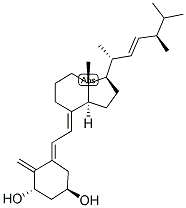
Doxercalciferol, chemically known as 1-alpha-hydroxyvitamin D2, is a potent synthetic prodrug of vitamin D2 primarily utilized in the management of secondary hyperparathyroidism associated with chronic kidney disease (CKD). With the molecular formula C28H46O2 and a CAS registry number of 73955-30-3, this compound functions as an active analog of calcitriol. Unlike native vitamin D, Doxercalciferol requires activation within the body to exert its physiological effects. Once administered, it undergoes hydroxylation in the liver to form 1,25-dihydroxyvitamin D2, the biologically active metabolite that regulates calcium and phosphorus homeostasis.
The primary clinical application of Doxercalciferol involves suppressing the overproduction of parathyroid hormone (PTH) in patients with end-stage renal disease who are undergoing dialysis. In CKD, the kidneys lose the ability to convert vitamin D into its active form, leading to hypocalcemia and elevated PTH levels, which can cause severe bone disorders such as renal osteodystrophy. By mimicking the action of natural 1,25-dihydroxyvitamin D, Doxercalciferol binds to vitamin D receptors in the parathyroid glands, thereby inhibiting PTH synthesis and secretion. This mechanism helps maintain serum calcium and phosphorus levels within target ranges, reducing the risk of vascular calcification and bone fractures.
Clinically, Doxercalciferol is available in oral capsule and intravenous injection formulations, allowing for flexible dosing strategies tailored to individual patient needs. Its selective action on the parathyroid gland often results in fewer side effects related to hypercalcemia compared to some other vitamin D analogs, although monitoring of calcium and phosphorus levels remains essential during therapy. The drug has become a cornerstone in nephrology practice, significantly improving the quality of life for dialysis patients by mitigating the complications of mineral and bone disorder. Ongoing research continues to explore its potential benefits in broader contexts of metabolic bone health, reinforcing its status as a critical therapeutic agent in modern medicine.



 (All Rights Reserved)






![4-[[[[6-[(Diethylamino)methyl]-2-naphthalenylmethoxy]carbonyllaminolbenzoic acid](https://eimg.pharmasources.com/image/20241206/xJCFsdgfMrHzqjtgeOixhGQHgVbKi7kAcoEqemzE.jpg)