packaging : Length x Width x Height shipping_port :
Product Description
AI Product Description
*The following content is generated by AI and is for reference only.
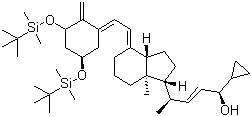
Bis-TBDMS-trans-calcipotriol is a highly specialized synthetic derivative of calcipotriol, the active vitamin D3 analog widely used in dermatological treatments for psoriasis. This compound features two tert-butyldimethylsilyl (TBDMS) protecting groups attached to the hydroxyl moieties at positions 1 and 25 of the steroid backbone, rendering it chemically stable yet biologically inert until enzymatic cleavage occurs in vivo. Currently, this specific molecule does not possess an assigned CAS number in major public chemical databases, as it is primarily utilized as a research intermediate rather than a commercial pharmaceutical product. Its molecular formula is typically represented as C37H64O2Si2, reflecting the addition of bulky silyl groups to the parent calcipotriol structure.
The primary utility of Bis-TBDMS-trans-calcipotriol lies in pharmacological research and drug delivery studies. Researchers employ this protected analog to investigate the metabolic pathways of vitamin D derivatives, specifically focusing on how skin enzymes like phosphatases or esterases remove the TBDMS groups to regenerate the active trans-calcipotriol form. By modulating the release kinetics through these protecting groups, scientists can potentially enhance the stability of the drug against premature degradation, improve its lipophilicity for better skin penetration, or reduce local irritation associated with high concentrations of the active agent. Furthermore, this derivative serves as a crucial tool in synthesizing novel vitamin D analogs with tailored therapeutic profiles. While the parent compound effectively treats plaque psoriasis by regulating keratinocyte proliferation and differentiation, the bis-silylated version offers a controlled-release mechanism that may minimize systemic absorption and side effects. It is strictly intended for laboratory use and preclinical investigations, aiding in the development of next-generation topical therapies with optimized safety and efficacy profiles.