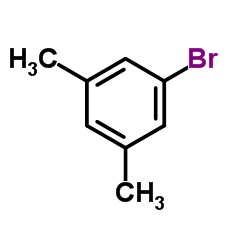
Chemical name: 3,5-dimethylbromobenzene
Alias: 1-bromo-3,5-dimethylbenzene, 5-bromo-m-xylene, 5-bromo-m-xylene
Molecular formula: C₈H₉Br
Molecular weight: 185.06 g/mol
CAS No.: 556-96-7
Use: Pharmaceutical intermediates
*The following content is generated by AI and is for reference only.
5-Bromo-m-xylene, chemically known as 1-bromo-3-methylbenzene or more accurately 2-bromo-1,3-dimethylbenzene depending on specific nomenclature conventions for the m-xylene backbone, is a specialized aromatic halide widely utilized in organic synthesis and pharmaceutical research. With the molecular formula C8H9Br and a CAS registry number of 607-74-5, this compound serves as a critical intermediate in the construction of complex molecular architectures. The molecule features a benzene ring substituted with two methyl groups in a meta-configuration relative to each other and a single bromine atom attached at the fifth position, creating a unique steric and electronic environment ideal for selective chemical transformations.
In industrial and laboratory settings, 5-Bromo-m-xylene is primarily employed as a building block for synthesizing advanced materials, including high-performance polymers, liquid crystals, and functional dyes. Its bromine substituent acts as a versatile leaving group, facilitating key cross-coupling reactions such as Suzuki-Miyaura, Heck, and Stille couplings. These reactions are indispensable for forming carbon-carbon bonds, allowing chemists to attach diverse aryl or alkyl groups to the core structure efficiently. Consequently, it plays a pivotal role in the development of novel agrochemicals, where precise structural modifications are required to enhance biological activity and selectivity.
Furthermore, this reagent finds significant application in the medicinal chemistry sector during the discovery phase of new drug candidates. Researchers utilize it to construct heterocyclic scaffolds that mimic biologically active natural products. The presence of the meta-substituted methyl groups can influence the metabolic stability and binding affinity of final compounds, making the starting material particularly valuable for optimizing lead structures. Safety protocols emphasize handling this substance with care, as organic bromides can be irritants and potential mutagens; proper ventilation and personal protective equipment are mandatory during use. Overall, 5-Bromo-m-xylene remains an essential commodity in the fine chemical industry, bridging the gap between simple petrochemical derivatives and sophisticated, high-value end-products across multiple technological domains.





 (All Rights Reserved)

![8,16-Diazadispiro[6.1.6.2]heptadecan-17-one](https://eimg.pharmasources.com/image/product/20250403/ca91cba8b87e53fc879f8d8764873a40jpg)
![6,8-Dioxo-5,7-diazaspiro[3.4]octane-2-carboxylic acid](https://eimg.pharmasources.com/image/product/20250403/02effeb5a7639bc84ff1f3add3c0c64fjpg)
![8-Oxa-1,3-diazaspiro[4.5]decane-2,4-dione](https://eimg.pharmasources.com/image/product/20250403/60fa7223d5a34f24138486ceea0ffb15jpg)
