Product Description
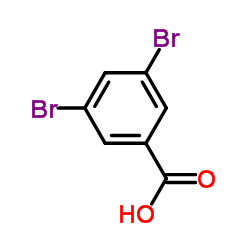
Chemical name: 3,5-dibromobenzoic acid
Molecular Formula: C₇H₄Br₂O₂
Molecular weight: 279.91 g/mol
Usage
Organic synthesis: as an intermediate in the preparation of compounds containing bromoaromatic acid structure;
Pharmaceutical field: used in the synthesis of drug active molecules;
Fine chemicals: as a raw material in coupling reaction or functionalization modification
AI Product Description
*The following content is generated by AI and is for reference only.
3,5-Dibromobenzoic acid is a specialized organic compound widely utilized in the fields of pharmaceutical synthesis, agrochemical development, and materials science. With the chemical formula C7H4Br2O2 and a molecular weight of approximately 291.91 g/mol, this white to off-white crystalline solid serves as a crucial intermediate for constructing complex molecular architectures. Its primary identifier, the CAS number 585-60-4, ensures precise tracking and procurement within global supply chains.
The core utility of 3,5-dibromobenzoic acid lies in its unique substitution pattern. The presence of two bromine atoms at the meta positions (3 and 5) relative to the carboxylic acid group creates a distinct electronic environment that facilitates various cross-coupling reactions. Chemists frequently employ this compound as a starting material for synthesizing heterocyclic compounds, including benzofurans, benzoxazoles, and quinolines, which are often found in bioactive drugs. In medicinal chemistry, derivatives of this acid have shown promise in developing anti-inflammatory agents, anticancer therapeutics, and antimicrobial compounds due to their ability to modulate specific biological pathways.
Beyond pharmaceuticals, this reagent plays a significant role in the production of advanced materials. It acts as a building block for metal-organic frameworks (MOFs) and coordination polymers, where its rigid structure helps define pore sizes and stability. Additionally, it is used in the synthesis of liquid crystals and functional dyes, contributing to the performance of display technologies and optical sensors. The bromine substituents allow for further functionalization through nucleophilic aromatic substitution or palladium-catalyzed coupling, making it an indispensable tool for researchers designing molecules with tailored properties.
Safety protocols must be observed during handling, as halogenated organic acids can be irritants. Proper storage in a cool, dry place away from incompatible bases is recommended to maintain purity. As demand for high-performance fine chemicals grows, 3,5-dibromobenzoic acid remains a versatile and essential component in modern laboratory research and industrial manufacturing processes, bridging the gap between basic organic synthesis and advanced application technologies.





 (All Rights Reserved)

![6,8-Dioxo-5,7-diazaspiro[3.4]octane-2-carboxylic acid](https://eimg.pharmasources.com/image/product/20250403/02effeb5a7639bc84ff1f3add3c0c64fjpg)
![8-Oxa-1,3-diazaspiro[4.5]decane-2,4-dione](https://eimg.pharmasources.com/image/product/20250403/60fa7223d5a34f24138486ceea0ffb15jpg)
![8,16-Diazadispiro[6.1.6.2]heptadecan-17-one](https://eimg.pharmasources.com/image/product/20250403/ca91cba8b87e53fc879f8d8764873a40jpg)