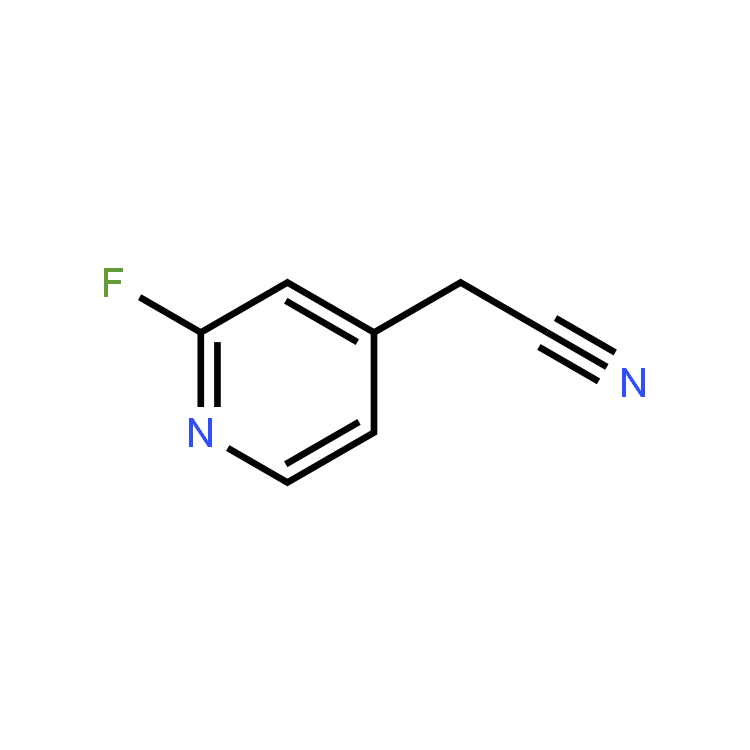
Product Description
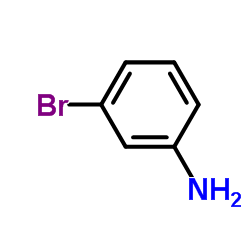
Chemical name: 3-Bromoaniline
Alias: m-Bromoaniline
Molecular Formula: C₆H₆BrN
Molecular weight: 172.02 g/mol
Used in dyestuff industry: used as intermediate in the synthesis of dyestuff;
Used in organic synthesis: involved in the synthesis of drugs or fine chemicals.
AI Product Description
*The following content is generated by AI and is for reference only.
3-Bromoaniline, chemically known as 3-bromoaniline or m-bromoaniline, is a vital organic intermediate widely utilized in the pharmaceutical and agrochemical industries. Its molecular formula is C6H6BrN, indicating a benzene ring substituted with an amino group at position 1 and a bromine atom at position 3. The compound carries the CAS Registry Number 591-20-2. Physically, it typically appears as a pale yellow to brownish crystalline solid with a characteristic amine-like odor. It exhibits moderate solubility in organic solvents such as ethanol, ether, and chloroform, while being sparingly soluble in cold water.
The primary application of 3-bromoaniline lies in its role as a key building block for synthesizing complex heterocyclic compounds and dyes. In the pharmaceutical sector, it serves as a crucial precursor for the production of various sulfa drugs, antihistamines, and other nitrogen-containing therapeutic agents. The presence of the bromine substituent allows for further functionalization through cross-coupling reactions, enabling the construction of diverse molecular architectures essential for drug discovery. Additionally, it is employed in the synthesis of azo dyes and pigments used in textile and printing industries due to its ability to form stable colored complexes.
In agricultural chemistry, derivatives of 3-bromoaniline contribute to the development of novel herbicides and fungicides designed to protect crops from pests and diseases. Its reactivity makes it suitable for producing intermediates that enhance crop yield and quality. Safety protocols are paramount when handling this substance, as it is toxic if swallowed, inhaled, or absorbed through the skin. It may cause irritation to the eyes, respiratory tract, and skin. Proper personal protective equipment, including gloves and goggles, along with adequate ventilation, is mandatory during laboratory or industrial processing. Storage should be conducted in a cool, dry, well-ventilated area away from incompatible oxidizers and strong acids to prevent decomposition or hazardous reactions. Overall, 3-bromoaniline remains an indispensable chemical entity in modern synthetic chemistry, bridging fundamental research with large-scale industrial applications across multiple sectors.





 (All Rights Reserved)


![8,16-Diazadispiro[6.1.6.2]heptadecan-17-one](https://eimg.pharmasources.com/image/product/20250403/ca91cba8b87e53fc879f8d8764873a40jpg)
![6,8-Dioxo-5,7-diazaspiro[3.4]octane-2-carboxylic acid](https://eimg.pharmasources.com/image/product/20250403/02effeb5a7639bc84ff1f3add3c0c64fjpg)
![8-Oxa-1,3-diazaspiro[4.5]decane-2,4-dione](https://eimg.pharmasources.com/image/product/20250403/60fa7223d5a34f24138486ceea0ffb15jpg)