
Size of the cosmetic medicine market in China reached RMB122 billion in 2018, making it the second largest cosmetic medicine market in the world. From the perspective of the market segment performance, cosmetic medicine products such as hyaluronic acid led to the rapid growth of the micro-plastic surgery market and are currently used in the most popular cosmetic medicine micro-plastic surgery items.
What is hyaluronic acid?

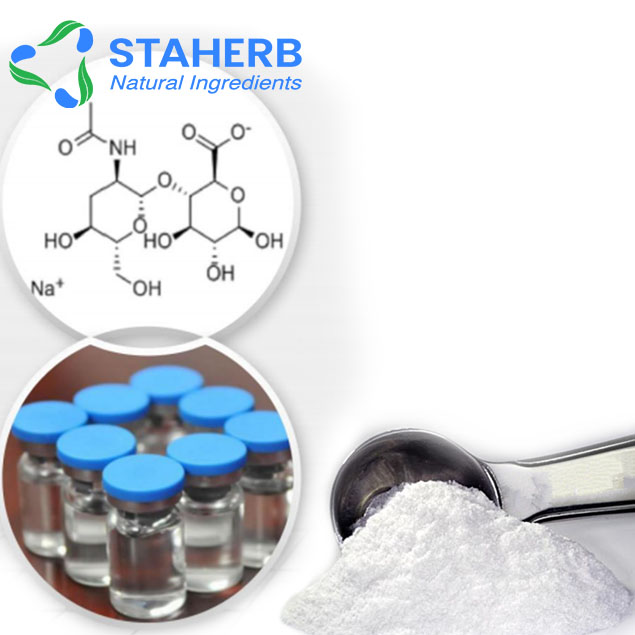
Hyaluronic acid, also known as hyaluronan, is a sulfur-free straight chain mucopolysaccharide composed of repeat disaccharide units of D-glucuronic acid and N-acetylglucosamine, which widely distributes in human connective tissue, epithelial tissue, and nervous tissue. Hyaluronic acid was separated by Karl Meyer and John Palmer at Columbia University from the vitreous humor of cow eyes in 1934.
Hyaluronic acid is extensively used in the cosmetic medicine industry as a dermal filler, which generally enters the dermis by injection to play the moistening, lubricating, and shaping roles. It can be used as a filler in the micro-plastic surgery field for augmentation rhinoplasty, chin filling, lip augmentation, and wrinkle prevention, etc. or used as a hydro-lifting injection for moisturizing and accounts for a leading share in the cosmetic medicine filler market.
First approved by the FDA in 2003 for skin anti-wrinkle treatment, hyaluronic acid has gradually been used in hydro-lifting injection, etc. for skin moisturizing owing to its moisturizing and moisture-locking functions.
Hyaluronic acid can be divided into macromolecule, middle molecule, and small molecule types depending on the molecular weight. Molecular weight is an important parameter of hyaluronic acid as hyaluronic acids of different molecular weights have different function application fields.
Scope of Application of Different Hyaluronic Acid Molecules | |||
Molecular type | Macromolecule | Middle molecule | Small molecule |
Applicable to sites of | Filling of fine sites and removal of superficial wrinkles, lying silkworm lines, lip wrinkles, neck wrinkles, and nasolabial folds | Filling of soft tissue, removal of deep wrinkles, forehead augmentation, radix nasi augmentation, temple augmentation, filling of lacrimal groove, submalar triangle augmentation, augmentation rhinoplasty, cheek augmentation, lip augmentation, and filling of nose and labial groove | Contour shaping, superciliary arch lifting, radix nasi augmentation, augmentation rhinoplasty, and chin augmentation |
Filling of fine sites and removal of superficial wrinkles, lying silkworm lines, lip wrinkles, neck wrinkles, and nasolabial folds
Filling of soft tissue, removal of deep wrinkles, forehead augmentation, radix nasi augmentation, temple augmentation, filling of lacrimal groove, submalar triangle augmentation, augmentation rhinoplasty, cheek augmentation, lip augmentation, and filling of nose and labial groove
Contour shaping, superciliary arch lifting, radix nasi augmentation, augmentation rhinoplasty, and chin augmentation
Global main origins of hyaluronic acid raw materials
Sales of the hyaluronic acid raw materials reached 4.30 million tons in China in 2018, accounting for 86% of global sales, with the market size of the raw materials reaching RMB3.07 billion. From the perspective of product structure, the Chinese-produced hyaluronic acid raw materials were mainly cosmetic-grade and food-grade raw materials with low added values, and the pharmaceutical-grade raw materials with high added values accounted for a low proportion.
From the perspective of sales, the global top 5 manufacturers of hyaluronic acid raw materials are all Chinese enterp...
























 (All Rights Reserved)