Product Description
1. RC membrane, very low non-specifc binding.
2. High (typically >90%)recovery.
3. Quick processing time( as little as 10-60 minutes).
4. Rapid protein concentration(80-100 fold concentration).
5.Broad chemical compatibility
AI Product Description
*The following content is generated by AI and is for reference only.
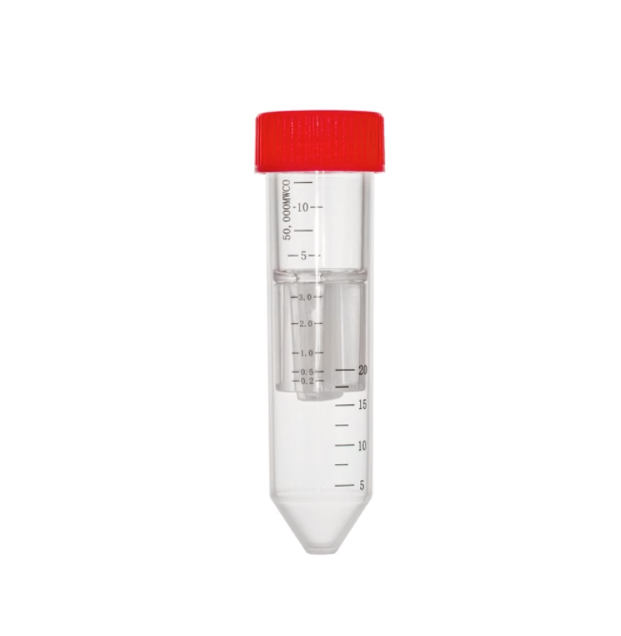
Ultrafiltration centrifuge tubes are essential laboratory tools designed for the rapid concentration, desalting, and buffer exchange of biological macromolecules. These devices utilize a semi-permeable membrane with a specific molecular weight cut-off (MWCO) to separate target molecules from smaller solutes or contaminants under centrifugal force. They are widely employed in biochemistry, molecular biology, and proteomics for processing proteins, nucleic acids, viruses, and antibodies. The primary advantage lies in their ability to handle small sample volumes efficiently without the need for time-consuming dialysis or lyophilization, preserving sample integrity while achieving high recovery rates.
The device typically consists of a durable polypropylene tube housing an integrated filter insert. During operation, samples are loaded into the insert, and the assembly is placed in a standard benchtop centrifuge. As the rotor spins, hydrostatic pressure forces solvent through the membrane pores, retaining larger molecules above the specified cutoff while allowing salts, buffers, and small impurities to pass into the collection vessel below. This process enables precise volume reduction and buffer replacement in a single step.
Several critical precautions must be observed to ensure optimal performance and safety. First, always verify that the sample volume does not exceed the maximum capacity indicated on the tube to prevent leakage or membrane rupture. Second, select a centrifuge speed appropriate for the specific membrane material and MWCO; exceeding recommended relative centrifugal force (RCF) can damage the filter structure or cause sample loss. Third, maintain consistent temperature control if working with heat-sensitive biomolecules, as excessive friction during high-speed spinning can generate heat. Additionally, avoid using organic solvents unless the membrane material is explicitly rated for chemical compatibility, as this may degrade the filter. Finally, ensure proper sealing before centrifugation to prevent cross-contamination between samples. By adhering to these guidelines, researchers can achieve reliable separation results while extending the lifespan of the equipment.





 (All Rights Reserved)