Product Description
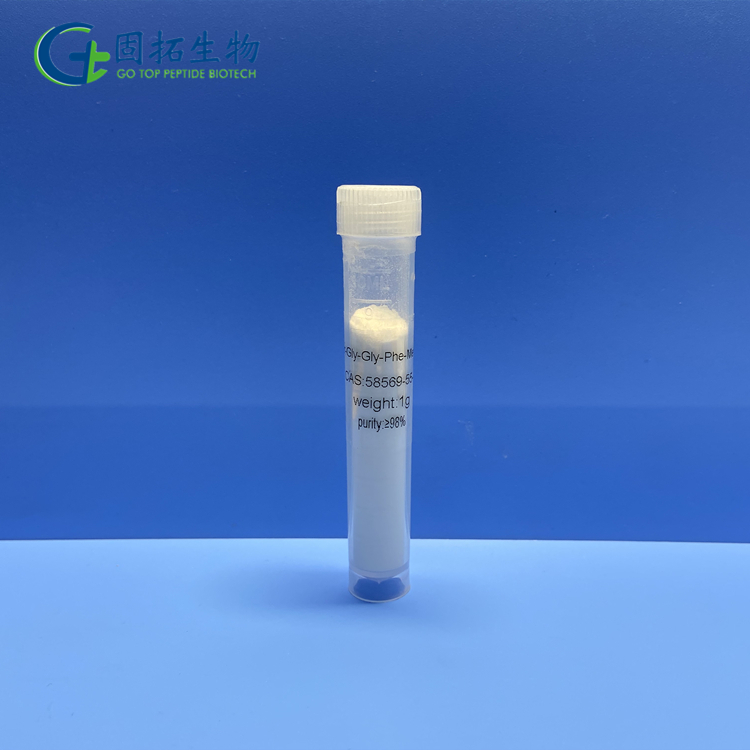
Tyr-Gly-Gly-Phe-Met-OH is a peptide composed of 5 amino acids, which can regulate the physiological function of human immune function. Tyr-Gly-Gly-Phe-Met-OH binds to opioid receptors to further regulate immune function, thereby inhibiting tumor growth.
AI Product Description
*The following content is generated by AI and is for reference only.
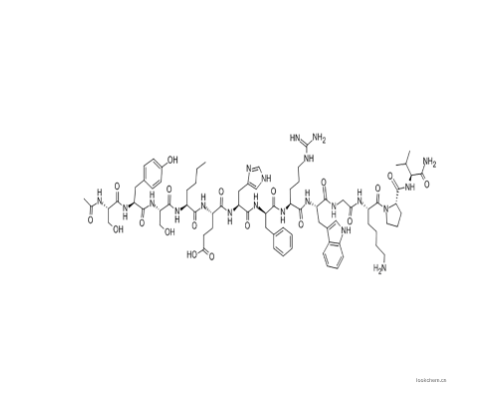
Tyr-Gly-Gly-Phe-Met-OH is a synthetic pentapeptide composed of five amino acid residues: Tyrosine, Glycine, Glycine, Phenylalanine, and Methionine, linked by peptide bonds in that specific sequence. Its chemical structure features a free carboxylic acid group at the C-terminus and a free amine group on the N-terminal tyrosine residue. The molecular formula for this compound is C24H31N5O7S, corresponding to a molecular weight of approximately 509.58 g/mol. While specific CAS registry numbers may vary slightly depending on the supplier or salt form (e.g., acetate or hydrochloride), the core peptide structure is widely recognized in biochemical research. This molecule serves as a critical tool in various scientific fields, particularly in pharmacology and biochemistry. It is frequently utilized as a substrate for studying enzymatic activities, specifically those of metalloproteinases like matrix metalloproteinases (MMPs) or serine proteases, which cleave peptide bonds within such sequences. Researchers often employ this peptide to screen for potential inhibitors used in drug development against cancer metastasis or inflammatory diseases where protein degradation plays a pivotal role. Furthermore, its sequence shares homology with biologically active fragments found in endogenous proteins, making it valuable for investigating receptor binding interactions and signal transduction pathways. In analytical chemistry, it acts as a standard reference material for validating mass spectrometry techniques and high-performance liquid chromatography (HPLC) methods due to its defined composition and stability. The presence of aromatic residues like tyrosine and phenylalanine allows for convenient detection via UV absorbance, while the methionine side chain offers unique oxidation sites for mechanistic studies. Although not typically administered as a therapeutic agent itself, Tyr-Gly-Gly-Phe-Met-OH is indispensable for fundamental research into peptide metabolism, enzyme kinetics, and the design of novel peptide-based therapeutics. Its synthesis is generally achieved through solid-phase peptide synthesis (SPPS), ensuring high purity required for sensitive biological assays. As a standardized reagent, it bridges the gap between theoretical biochemistry and practical laboratory applications, supporting advancements in understanding complex biological systems and developing targeted medical interventions.





 (All Rights Reserved)