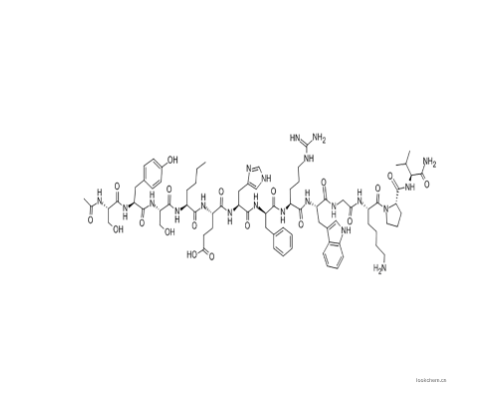
Product Description
Hangzhou Go Top Peptide Biotech Co.,Ltd. - a reliable supplier of peptides synthesis.Our clients include * the pharma, cosmetic and biotech companies and research institutions worldwide. Welcome to contact us by email to sales27@gotopbio.com
AI Product Description
*The following content is generated by AI and is for reference only.
TCFH, chemically known as Tetrafluorohydrazine (N2F4), is a critical inorganic compound widely utilized in the semiconductor and aerospace industries. Its molecular formula is N2F4, and it carries the CAS registry number 7783-65-1. At standard temperature and pressure, TCFH appears as a colorless gas with a faint, characteristic odor, though it is often handled in liquefied form under pressure for industrial applications. The compound is notable for its high thermal stability and unique reactivity profile, making it an indispensable fluorinating agent in advanced manufacturing processes.
In the semiconductor sector, TCFH serves as a primary source of atomic nitrogen and fluorine for plasma etching and cleaning procedures. It is particularly effective in removing photoresist residues and depositing high-quality dielectric films on silicon wafers without damaging underlying structures. The ability to generate reactive species at relatively low temperatures allows manufacturers to maintain precise control over feature dimensions in nanoscale devices, which is essential for modern microelectronics production. Furthermore, its use contributes to improved yield rates and device reliability by minimizing contamination during fabrication.
Beyond electronics, TCFH finds significant application in the synthesis of specialized organic compounds and pharmaceutical intermediates where controlled fluorination is required. In aerospace engineering, it has been investigated as a potential component in monopropellant systems or oxidizers due to its energetic properties, although safety protocols regarding its decomposition are strictly enforced. Despite its utility, handling TCFH requires rigorous safety measures because it can be toxic and corrosive upon exposure to moisture, potentially forming hydrofluoric acid. Proper ventilation, personal protective equipment, and leak detection systems are mandatory in facilities utilizing this chemical. As technology advances toward smaller nodes and more complex materials, the demand for high-purity TCFH continues to grow, solidifying its role as a cornerstone reagent in high-tech industries. Ongoing research aims to optimize its delivery methods and enhance environmental safety while maintaining its superior performance characteristics in critical applications.




 (All Rights Reserved)