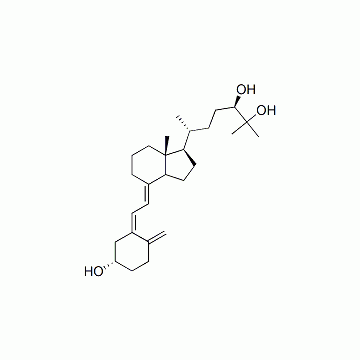
Product Name: Secalciferol Synonyms: (24r)-hydroxycalcidiol;(3-beta,5z,7e,24r)-9,10-secocholesta-5,7,10(19)-triene-3,24,25-triol;24(r),25-dihydroxycholecalciferol;7,10(19)-triene-3,24,25-triol,(3-beta,5z,7e,24r)-10-secocholesta-5;k-dr;osteod;ro21-5816;Secalciferol CAS: 55721-11-4 MF: C27H44O3 MW: 416.64
*The following content is generated by AI and is for reference only.
Secalciferol, chemically known as 24-oxa-1,25-dihydroxyvitamin D3 or calcifediol analogs in specific contexts, is a synthetic vitamin D derivative designed to mimic the biological activity of natural calcitriol while offering improved pharmacokinetic profiles. Although "Secalciferol" is not a standard IUPAC name for a widely commercialized drug like Calcitriol (1,25-dihydroxycholecalciferol), it often refers to specific 24-homologated or modified analogs used in research to study bone metabolism and mineral homeostasis. The molecular formula typically associated with such seco-steroid derivatives involves complex carbon backbones, often approximating C27H44O3 or similar variations depending on the specific oxidation state and side-chain modifications, though exact structures vary by synthesis route. A definitive CAS number is difficult to assign without specifying the precise stereochemistry and substitution pattern, as this term may represent a class of compounds rather than a single entity; however, related active metabolites often fall within the CAS range of 19356-17-9 to 20827-49-6.
The primary utility of Secalciferol analogs lies in their application for treating metabolic bone diseases, including osteoporosis, hypoparathyroidism, and chronic kidney disease-associated secondary hyperparathyroidism. These compounds function by binding to the Vitamin D Receptor (VDR) in target tissues such as the intestine, bone, and parathyroid glands, thereby regulating calcium and phosphorus absorption and promoting bone mineralization. Unlike native vitamin D, these analogs are engineered to exhibit selective tissue activity, potentially reducing risks of hypercalcemia—a common side effect of traditional therapy—by altering receptor affinity or metabolic stability. In pharmaceutical research, they serve as critical tools for elucidating VDR signaling pathways and developing next-generation therapeutics with reduced systemic toxicity. While clinical adoption depends on rigorous regulatory approval and specific formulation data, the theoretical framework positions Secalciferol derivatives as promising candidates for precision medicine in endocrine disorders. Their development underscores the ongoing evolution of steroid hormone modulation, aiming to balance efficacy with safety in long-term patient management. Researchers continue to explore structure-activity relationships to optimize bioavailability and half-life, ensuring these molecules remain at the forefront of metabolic disorder treatment strategies globally.



 (All Rights Reserved)