Product Description
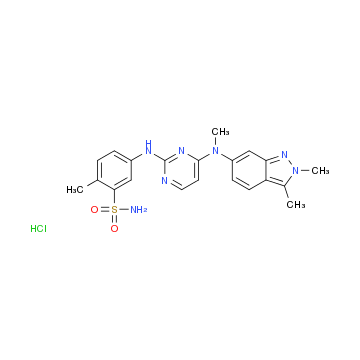
- 英文名称: pazopanib hydrochloride
- 别名: 5-[[4-[(2,3-二甲基-2H-吲唑-6-基)(甲基)氨基]嘧啶-2-基]氨基]-2-甲基苯磺酰胺盐酸盐; 帕唑帕尼盐酸盐;
- CAS号: 635702-64-6
- 分子式: C21H24ClN7O2S
- 分子量: 473.97900
AI Product Description
*The following content is generated by AI and is for reference only.
Pazopanib hydrochloride is a potent, small-molecule tyrosine kinase inhibitor (TKI) primarily utilized in the treatment of advanced renal cell carcinoma and certain soft tissue sarcomas. Its chemical identity is defined by the molecular formula C21H26FN5O3·HCl, with a corresponding CAS Registry Number of 879074-61-2. Structurally, this compound features a pyridinyl-piperazine core substituted with a fluorophenyl group, which facilitates high-affinity binding to multiple receptor tyrosine kinases. The drug functions as a multi-targeted inhibitor, effectively blocking the activity of vascular endothelial growth factor receptors (VEGFR-1, -2, and -3), platelet-derived growth factor receptors (PDGFR-α and -β), and the stem cell factor receptor c-KIT. By inhibiting these critical signaling pathways, Pazopanib hydrochloride disrupts tumor angiogenesis, thereby starving malignant cells of the blood supply necessary for growth and metastasis. It also exerts anti-proliferative effects on tumor cells directly. Clinically administered as an oral tablet formulation containing the hydrochloride salt to ensure stability and solubility, it has become a standard-of-care first-line therapy for patients with advanced clear-cell renal cell carcinoma who have not received prior systemic therapy. Additionally, it is approved for the treatment of adult patients with unresectable or metastatic non-adipocytic soft tissue sarcoma. Common side effects include hypertension, diarrhea, hair color changes, and liver enzyme elevations, necessitating regular monitoring during treatment. As a white to off-white crystalline powder, Pazopanib hydrochloride represents a significant advancement in targeted cancer therapy, offering improved progression-free survival compared to older treatments while maintaining a manageable safety profile for long-term management of aggressive malignancies.





 (All Rights Reserved)


![4-[[[[6-[(Diethylamino)methyl]-2-naphthalenylmethoxy]carbonyllaminolbenzoic acid](https://eimg.pharmasources.com/image/20241206/xJCFsdgfMrHzqjtgeOixhGQHgVbKi7kAcoEqemzE.jpg)
