Product Description
✦ Available in standard size: ND8, ND9, ND10, ND13, ND15.
✦ They have a 40% larger opening, which improves sample accessibility and
reduces the risk of autosampler needle damage.
✦ Use solid top closures for long-term sample storage applications.
✦ All materials are produced in a class 100,000 cleanroom.
✦ OEM/ODM services are available
AI Product Description
*The following content is generated by AI and is for reference only.
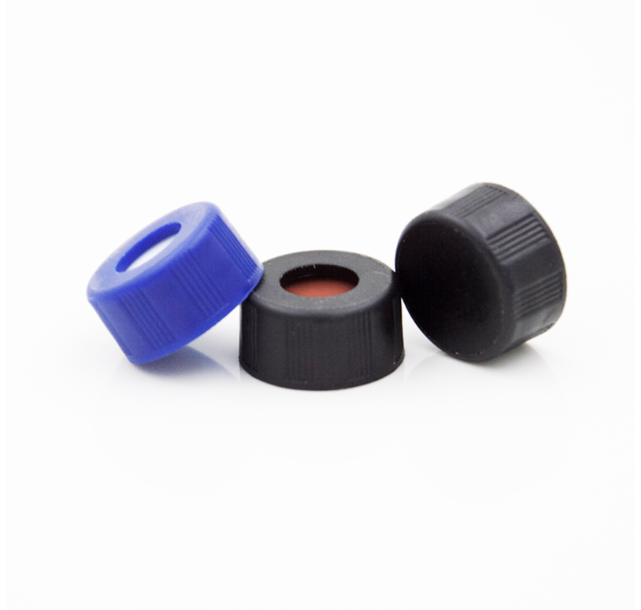
The 9-425 black polypropylene screw cap is a specialized closure component designed primarily for laboratory sampling vials, ensuring secure containment and sample integrity during storage and transport. Constructed from high-quality polypropylene, this cap offers exceptional chemical resistance against a wide range of solvents, acids, and bases, making it ideal for diverse analytical applications including chromatography, spectroscopy, and environmental testing. The 9mm diameter with a 425 thread pitch provides a standardized fit for corresponding glass or plastic vials, facilitating compatibility across various international laboratory equipment systems.
A key feature of this design is the inclusion of a PTFE-faced silicone septum, which allows for repeated needle penetration by syringes without compromising the seal or causing leakage. This ensures that volatile organic compounds (VOCs) and other sensitive samples remain uncontaminated and their volume remains constant throughout the analysis process. The black coloration serves a critical function in protecting light-sensitive substances from degradation caused by UV exposure, thereby preserving sample stability over extended periods. Furthermore, the "Noke" style design often implies a tamper-evident or specific locking mechanism that prevents accidental opening during handling or shipping, adding an extra layer of security for chain-of-custody requirements.
When using these caps, it is essential to ensure they are properly torqued to avoid cross-threading or insufficient sealing, which could lead to evaporation or contamination. Users should verify that the cap material is compatible with the specific solvent being analyzed, although polypropylene generally exhibits broad resistance. It is also recommended to store vials upright to prevent septum deformation and to inspect the liner for any signs of wear before use. Regular calibration of capping machinery is necessary to maintain consistent application pressure. By adhering to these best practices, laboratories can maximize the reliability of their analytical results while minimizing the risk of sample loss or data corruption due to improper packaging.





 (All Rights Reserved)