Product Description
Product Feature:
1. Pass the ISO9001:2015 quality certification. Audited and issued by the most stringent SGS in the industry.
2. Experienced technician with equipped R&D center to fulfill new research and product development.
3. Be 100% compatible with original Agilent, Waters, Virian, Shimadzu, Etc.
4. All materials are produced in a class 100,000 cleanroom.
5. OEM services are available.
AI Product Description
*The following content is generated by AI and is for reference only.
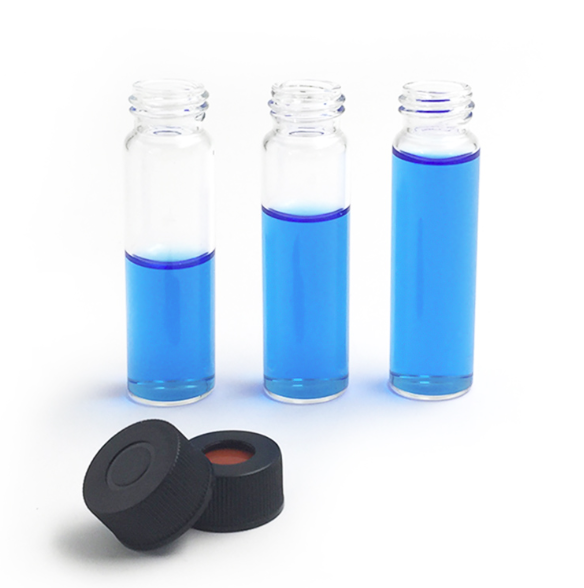
The product described refers to high-quality glass vials and caps specifically engineered for liquid chromatography mass spectrometry (LC-MS) applications, particularly when utilizing automated sampling systems. These 12 mL and 8 mL containers are designed to hold substantial sample volumes while maintaining the integrity required for precise analytical measurements. The "ND15" designation typically indicates a specific needle depth or compatibility standard, ensuring that robotic samplers can accurately penetrate the septum without damaging the needle or compromising the seal. Such vials are indispensable in pharmaceutical research, environmental testing, and forensic laboratories where reproducibility and contamination control are paramount.
Constructed from Type I borosilicate glass, these vessels offer exceptional chemical resistance and thermal stability, preventing leaching of silicates into sensitive samples. The accompanying caps feature inert liners, often made of PTFE/silicone composites, which provide an airtight seal to prevent solvent evaporation and protect against atmospheric oxidation. This is critical when analyzing volatile organic compounds or preparing standards for long-term storage. The standardized dimensions ensure seamless integration with various autosamplers found in modern HPLC and GC-MS instruments, minimizing run-to-run variability caused by mechanical misalignment.
When handling these vials, strict adherence to cleanliness protocols is essential. Users must avoid touching the inner surfaces or the septum to prevent particulate contamination, which can clog instrument lines or create ghost peaks in chromatograms. Prior to use, vials should be thoroughly rinsed with appropriate solvents and dried under a clean nitrogen stream if necessary. It is also crucial to verify that the cap torque is consistent; overtightening may crack the glass, while undertightening risks leakage during high-pressure injection cycles. Furthermore, operators should confirm that the vial height and diameter match the specific requirements of their autosampler tray to prevent mechanical jams. Proper labeling and storage in dust-free environments further ensure data reliability. By selecting certified low-binding vials, laboratories significantly enhance the accuracy of quantitative analysis and extend the lifespan of expensive instrumentation components.





 (All Rights Reserved)