Product Description
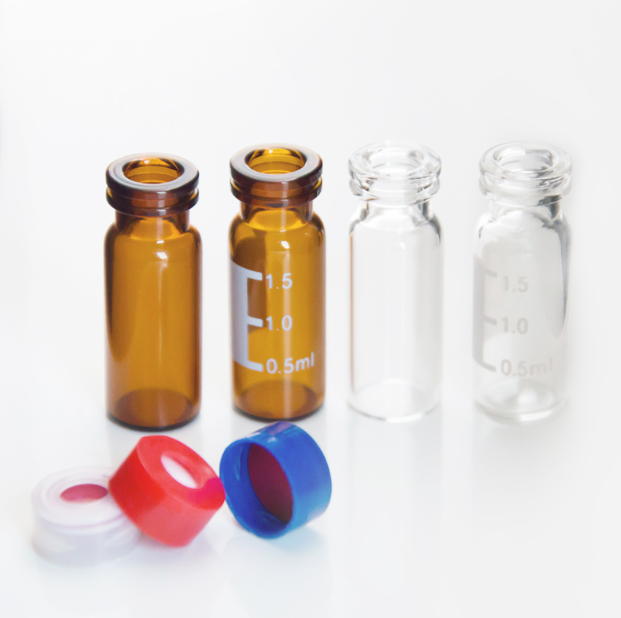
◊ High Compatibility: 11 mm screw cap vials are compatible with standard 11 mm screw cap with an 11 mm internal diameter.
◊ Various Septum Options: PTFE/silicone, solid polyethylene, polyurethane, and polyethylene olefin.
◊ For Nonvolatile Matrices: Ideal for nonvolatile liquid samples where an airtight seal isn’t necessary.
◊ Wide Applications: Commonly used in HPLC, pharmaceuticals, and biopharmaceuticals, and other related industries.
AI Product Description
*The following content is generated by AI and is for reference only.
The product described refers to a specialized laboratory container system consisting of snap-top vials and matching caps, designed primarily for the storage, transport, and analysis of liquid or semi-liquid samples in scientific and industrial settings. These vials are engineered with a secure, tamper-evident sealing mechanism that ensures sample integrity by preventing leakage, evaporation, and contamination during handling. The "snap" design allows for rapid opening and closing without the need for additional tools, significantly improving workflow efficiency in high-throughput environments such as pharmaceutical testing, environmental monitoring, forensic analysis, and clinical diagnostics.
Constructed from chemically inert materials like borosilicate glass or high-grade polypropylene, these containers offer excellent resistance to a wide range of solvents, acids, and bases, making them suitable for diverse analytical applications including chromatography (HPLC, GC), mass spectrometry, and spectroscopy. The transparent nature of the vials facilitates easy visual inspection of sample volume and condition, while standardized dimensions ensure compatibility with automated sampling systems and robotic handlers commonly found in modern laboratories.
When using these vials, several critical precautions must be observed to maintain safety and data accuracy. First, always verify material compatibility between the vial construction and the specific chemical being stored to prevent degradation or reaction. Second, ensure the snap cap is fully seated and locked before transporting samples to avoid accidental spills. Third, avoid over-tightening or forcing the cap, as this may compromise the seal or damage the vial neck. Additionally, users should inspect vials for micro-cracks or scratches prior to use, as structural defects can lead to failure under pressure or temperature changes. Proper labeling is essential to prevent cross-contamination and ensure traceability. For high-pressure or volatile applications, confirm that the specific vial model meets relevant safety standards. Regular calibration of the sealing mechanism and adherence to manufacturer guidelines regarding temperature limits will further enhance reliability. Ultimately, these vials represent a fundamental component in maintaining rigorous quality control across various scientific disciplines, balancing convenience with robust performance requirements.





 (All Rights Reserved)