*The following content is generated by AI and is for reference only.
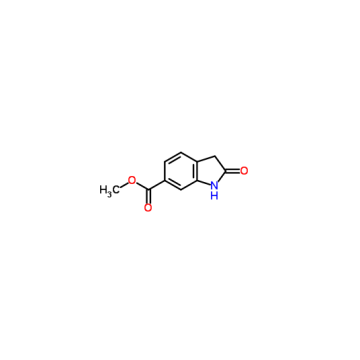
Methyl 2-Oxoindoline-6-carboxylate is a specialized heterocyclic compound widely utilized in medicinal chemistry and organic synthesis as a versatile synthetic intermediate. With the molecular formula C10H9NO3 and a molecular weight of approximately 191.18 g/mol, this white to off-white crystalline solid features a fused bicyclic structure comprising an indoline ring with a ketone functionality at the second position and a methyl ester group at the sixth carbon. Its primary Chemical Abstracts Service (CAS) Registry Number is 147399-58-6, which serves as the unique identifier for precise cataloging and safety data sheet retrieval across global chemical databases.
The compound plays a pivotal role in the development of bioactive pharmaceutical agents due to its structural similarity to numerous natural products and drug candidates. The presence of both the electrophilic carbonyl group within the lactam ring and the reactive ester moiety allows for diverse chemical transformations. Researchers frequently employ it as a starting material for synthesizing complex indole-based alkaloids, kinase inhibitors, and anti-inflammatory agents. Through reactions such as nucleophilic substitution, reduction, or condensation, chemists can introduce various substituents to fine-tune the pharmacological properties of the resulting molecules.
In industrial applications, Methyl 2-Oxoindoline-6-carboxylate is valued for its stability under standard storage conditions and its solubility in common organic solvents like dimethyl sulfoxide (DMSO), ethanol, and dichloromethane. These characteristics facilitate its use in high-throughput screening campaigns aimed at discovering novel therapeutic leads. Furthermore, its structural framework provides a robust scaffold for generating libraries of analogues, accelerating the drug discovery process by enabling rapid structure-activity relationship (SAR) studies. Safety protocols indicate that while it is generally stable, handling requires standard laboratory precautions to avoid inhalation or skin contact, consistent with typical organic intermediates. As the demand for efficient synthesis routes to nitrogen-containing heterocycles grows, this specific derivative remains a critical building block for advancing research in oncology, neurology, and infectious disease therapeutics, underscoring its enduring significance in modern chemical science.