Product Description
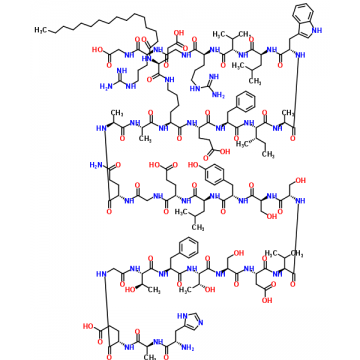
- 英文名称: Liraglutide
- 别名: 利拉鲁肽
- CAS号: 204656-20-2
- 分子式: C172H265N43O51
- 分子量: 3751.20
AI Product Description
*The following content is generated by AI and is for reference only.
Liraglutide is a glucagon-like peptide-1 (GLP-1) receptor agonist, a class of medications primarily utilized in the management of type 2 diabetes and obesity. Chemically, it is a modified version of the native human GLP-1 hormone, engineered to resist degradation by the enzyme dipeptidyl peptidase-4 (DPP-4). Its molecular formula is C₁₆₇H₂₅₉N₄₅O₅₀, and it carries the CAS Registry Number 507938-56-3. The structural modification involves the addition of a fatty acid side chain, which allows the molecule to bind reversibly to albumin in the bloodstream. This binding significantly extends its half-life from mere minutes for the natural hormone to approximately 13 hours, enabling once-daily subcutaneous administration.
The primary therapeutic mechanism of liraglutide involves stimulating insulin secretion in a glucose-dependent manner, thereby lowering blood sugar levels without causing hypoglycemia when used as monotherapy. Simultaneously, it suppresses inappropriate glucagon secretion, slows gastric emptying, and acts on appetite centers in the hypothalamus to promote satiety. Originally approved under brand names such as Victoza for glycemic control in adults with type 2 diabetes, it has since received broader approval for weight management under the name Saxenda. Clinical trials have demonstrated its efficacy not only in improving HbA1c levels but also in inducing significant and sustained weight loss, reducing cardiovascular risk factors, and improving overall metabolic health.
Beyond diabetes and obesity, ongoing research explores its potential benefits in non-alcoholic steatohepatitis (NASH) and other metabolic disorders. As a peptide drug, it is supplied as a clear solution for injection via pre-filled pens. While generally well-tolerated, common side effects include nausea, vomiting, diarrhea, and constipation, which often diminish over time. Serious but rare risks involve thyroid C-cell tumors observed in rodent studies, leading to contraindications for patients with a personal or family history of medullary thyroid carcinoma. Liraglutide represents a pivotal advancement in endocrinology, offering a dual-action approach to managing complex metabolic diseases through precise hormonal modulation.





 (All Rights Reserved)

![4-[[[[6-[(Diethylamino)methyl]-2-naphthalenylmethoxy]carbonyllaminolbenzoic acid](https://eimg.pharmasources.com/image/20241206/xJCFsdgfMrHzqjtgeOixhGQHgVbKi7kAcoEqemzE.jpg)