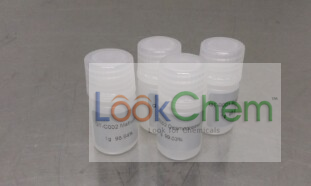
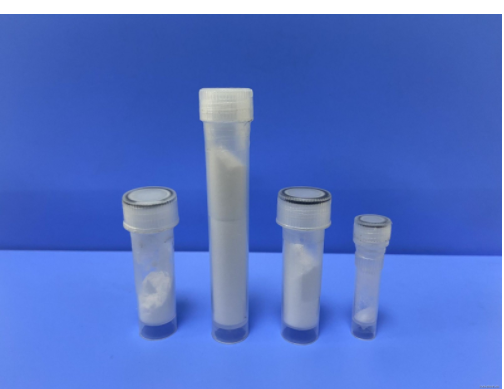
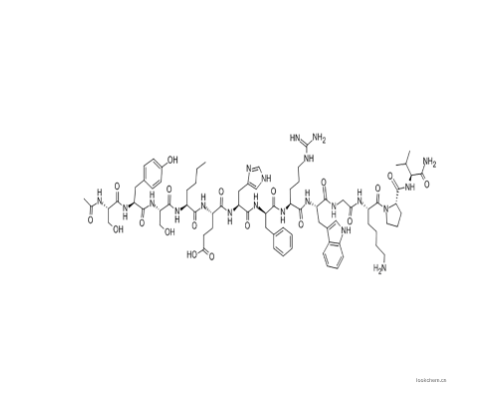
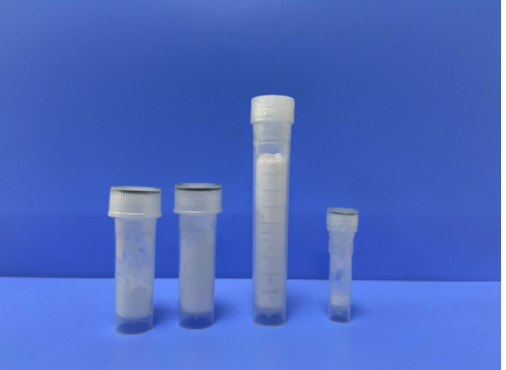
Product name: Palmitoyl four peptide 7 English name: Palmitoyl Tetrapeptide - 7 cas No. : 221227-05-0 product standards: characteristics of white powder molecular weight 694.92 dissolve fat soluble (MS), not easily soluble specifications: 1 g, 10 g, 50 g, 100 g/bottle preservation: a cool environment preservation.
Conventional save 2-8 ℃ temperature, long-term preservation temperature - 20 ℃
*The following content is generated by AI and is for reference only.
L-Arginine, N-(1-oxohexadecyl)glycyl- is a specialized amino acid derivative featuring a long-chain fatty acyl group attached to the glycine moiety of L-arginine. Its molecular formula is C23H45N3O4, and it carries the CAS Registry Number 101789-63-9. This compound represents a unique class of lipid-amino acid conjugates, combining the biological properties of arginine with the amphiphilic nature of palmitoyl chains. The molecule possesses a hydrophilic arginine-glycine head group and a hydrophobic hexadecanoyl tail, granting it surfactant-like characteristics that are highly valuable in advanced pharmaceutical and cosmetic formulations.
In the realm of drug delivery, this derivative serves as a promising candidate for targeted therapeutic systems. The structural design facilitates improved membrane permeability, allowing for enhanced cellular uptake of active agents when utilized as a carrier or prodrug scaffold. Researchers often explore its potential in transdermal delivery systems where the fatty chain aids in penetrating the stratum corneum barrier while the arginine component ensures biocompatibility and interaction with specific cellular receptors. Furthermore, its zwitterionic nature at physiological pH contributes to stability in various aqueous environments, making it suitable for injection solutions or topical gels.
In the cosmetic industry, such amphiphilic compounds are increasingly valued for their ability to stabilize emulsions and improve the texture of skincare products. They can function as mild conditioning agents that support skin hydration without causing irritation. The presence of the amide bond offers metabolic stability, ensuring the molecule remains intact during formulation processing and storage. While specific clinical applications may vary based on regulatory approvals and ongoing research, the fundamental utility of L-Arginine, N-(1-oxohexadecyl)glycyl- lies in its dual functionality: acting as both a bioactive signaling modulator due to its arginine content and a structural lipid enhancer due to its long alkyl chain. As the demand for sophisticated, bio-inspired excipients grows, derivatives like this continue to attract significant attention from formulators seeking to optimize efficacy, safety, and delivery profiles in next-generation medical and personal care technologies.





 (All Rights Reserved)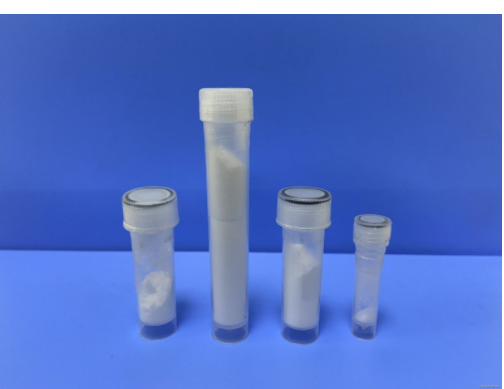

![8-Oxa-1,3-diazaspiro[4.5]decane-2,4-dione](https://eimg.pharmasources.com/image/product/20250403/60fa7223d5a34f24138486ceea0ffb15jpg)
![6,8-Dioxo-5,7-diazaspiro[3.4]octane-2-carboxylic acid](https://eimg.pharmasources.com/image/product/20250403/02effeb5a7639bc84ff1f3add3c0c64fjpg)
![8,16-Diazadispiro[6.1.6.2]heptadecan-17-one](https://eimg.pharmasources.com/image/product/20250403/ca91cba8b87e53fc879f8d8764873a40jpg)
