Product Description
|
ASSAY
|
99.6%
|
|
Sulfated ash
|
0.05%
|
|
Water
|
1.9%
|
|
Storage temp.
|
2-8°C
|
|
Total Impurities
|
0.36%
|
|
Form
|
Solid
|
|
Color
|
White to Off-White
|
AI Product Description
*The following content is generated by AI and is for reference only.
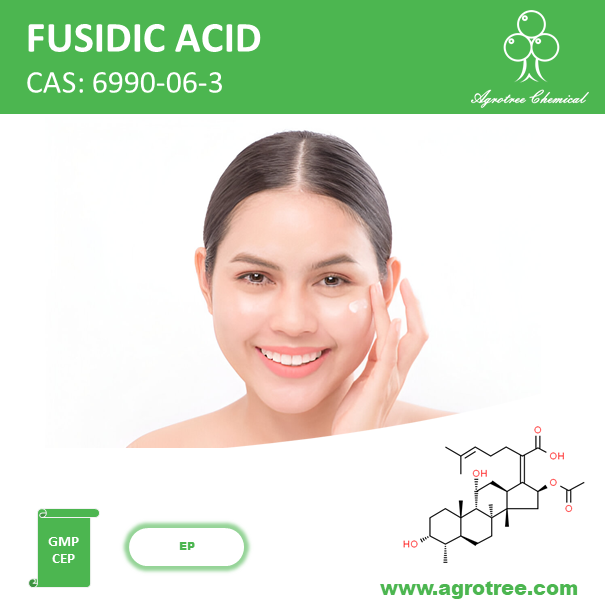
Fusidic acid is a potent steroid antibiotic derived from the fungus *Fusidium coccineum*. Its molecular formula is C31H48O6, and it is uniquely identified by the CAS number 146-22-9. Structurally, this compound belongs to the class of fusidane antibiotics, characterized by a complex tetracyclic steroid nucleus that distinguishes it from other antimicrobial agents. The drug functions primarily by inhibiting bacterial protein synthesis. Specifically, it binds to elongation factor G (EF-G) on the ribosome, thereby preventing the translocation step required for peptide chain elongation. This mechanism renders Fusidic acid highly effective against Gram-positive bacteria, with particular efficacy against methicillin-resistant *Staphylococcus aureus* (MRSA).
Clinically, Fusidic acid is widely utilized in the treatment of skin and soft tissue infections caused by susceptible staphylococcal species. It is frequently formulated as topical ointments or creams for conditions such as impetigo, infected eczema, and minor burns. In cases of severe systemic infection, intravenous formulations are employed, often in combination with other antibiotics like rifampicin or beta-lactams to enhance efficacy and prevent resistance development. Due to its unique mode of action, cross-resistance with other major antibiotic classes is rare, making it a valuable therapeutic option when standard treatments fail.
Beyond human medicine, Fusidic acid finds applications in veterinary practice for treating similar infections in animals. While generally well-tolerated, potential side effects can include gastrointestinal disturbances when taken orally or local irritation upon topical application. Its stability profile allows for diverse pharmaceutical preparations, ranging from eye drops for conjunctivitis to systemic injections. As antibiotic resistance continues to evolve globally, Fusidic acid remains a critical component of stewardship programs, offering a specialized solution for resistant Gram-positive pathogens where few alternatives exist. Ongoing research continues to explore novel delivery systems to improve bioavailability and reduce dosing frequency, ensuring its continued relevance in modern antimicrobial therapy.





 (All Rights Reserved)