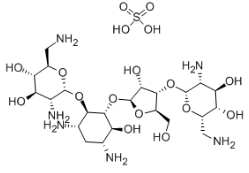
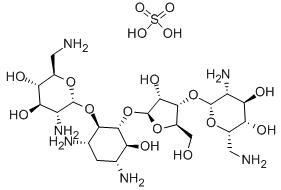
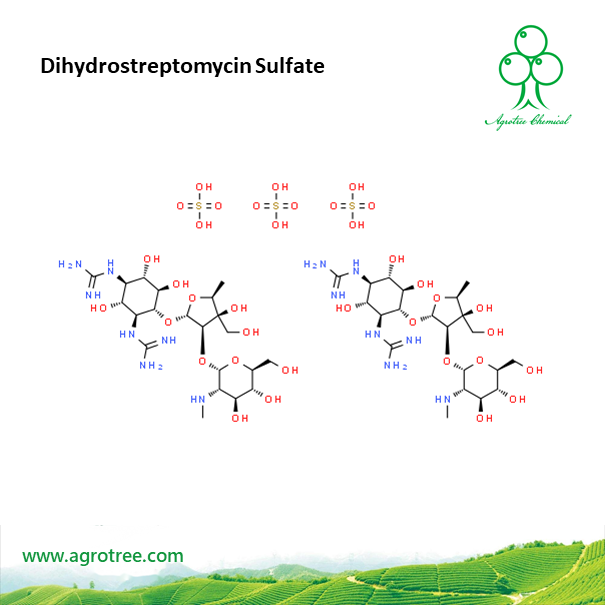
Dihydrostreptomycin is an aminoglycoside antibiotic. In humans, the use of dihydrostreptomycin has been associated with ototoxicity. The FDA withdrew its approval for using all drug products containing dihydrostreptomycin sulfate.
*The following content is generated by AI and is for reference only.
Dihydrostreptomycin Sulfate is a semi-synthetic aminoglycoside antibiotic derived from the natural product streptomycin. Chemically, it represents a reduced form of streptomycin where the aldehyde group at position 1 has been converted to a hydroxyl group, enhancing its stability and altering its pharmacokinetic profile. The molecular formula of Dihydrostreptomycin Sulfate is C42H80N12O23S, and it is uniquely identified by the CAS number 3729-65-5. As a sulfate salt, the compound exists as a white or off-white crystalline powder that is highly soluble in water but practically insoluble in organic solvents like ethanol and acetone.
This antibiotic functions primarily by inhibiting bacterial protein synthesis. It binds irreversibly to the 30S ribosomal subunit of susceptible bacteria, causing misreading of the genetic code and premature termination of peptide chain elongation. Consequently, it exhibits broad-spectrum bactericidal activity against both Gram-positive and Gram-negative organisms. While its clinical use in human medicine has declined significantly due to the emergence of more effective and less toxic alternatives, as well as concerns regarding ototoxicity and nephrotoxicity, Dihydrostreptomycin Sulfate remains a critical tool in veterinary medicine. It is widely employed in livestock production to treat respiratory infections, enteritis, and urinary tract infections caused by sensitive pathogens such as *Salmonella*, *E. coli*, and *Pasteurella* species.
Beyond therapeutic applications, this compound serves as an essential reagent in pharmaceutical research for developing new antimicrobial agents and studying bacterial resistance mechanisms. Its structural modification compared to native streptomycin offers unique insights into structure-activity relationships within the aminoglycoside class. In agricultural settings, it is often formulated into feed additives or injectable solutions to control disease outbreaks efficiently. However, strict regulatory guidelines govern its usage to prevent antibiotic residues in food products and to mitigate the risk of promoting drug-resistant bacterial strains. Overall, Dihydrostreptomycin Sulfate stands as a historically significant and still relevant chemical entity in the global fight against bacterial infections, particularly within the veterinary sector where its efficacy profile continues to provide value.




 (All Rights Reserved)