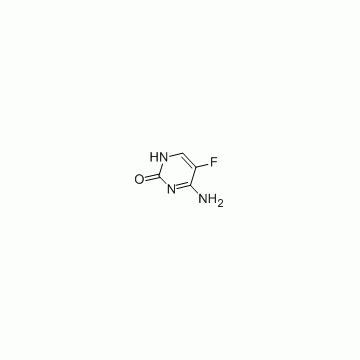
Name: Fluorocytosine
CAS: 2022-85-7
Molecular Formula: C4H4FN3O
Molecular Weight: 129.09
Welcome to contact: +86- 18046216202 (Jessica)
+86- 592 5789920 (Office Line)
*The following content is generated by AI and is for reference only.
Fluorocytosine, chemically known as 5-fluorocytosine or 5-FC, is a synthetic pyrimidine analog widely utilized in medical and research contexts. Its molecular formula is C4H4FN3O, and it is identified by the CAS number 2028-11-7. This compound serves primarily as an antifungal agent, specifically effective against susceptible strains of Candida species and Cryptococcus neoformans. The drug functions through a unique mechanism: upon entering fungal cells, it is converted by the enzyme cytosine deaminase into 5-fluorouracil (5-FU). Unlike human cells, which lack this specific conversion pathway, fungi transform 5-FC into toxic metabolites that interfere with DNA and RNA synthesis, ultimately inhibiting cell replication and leading to cell death.
Due to its narrow spectrum of activity and the rapid emergence of resistance when used as monotherapy, Fluorocytosine is almost exclusively administered in combination with other antifungals, most notably amphotericin B. This synergistic approach enhances efficacy while minimizing the risk of developing resistant fungal strains. Beyond clinical applications, 5-fluorocytosine is a valuable tool in biochemical research for studying fungal metabolism, gene expression, and the mechanisms of antimicrobial resistance. It acts as a critical probe for understanding nucleic acid biosynthesis pathways in microorganisms.
The compound typically appears as a white to off-white crystalline powder and is soluble in water. While generally well-tolerated, potential side effects include bone marrow suppression, hepatotoxicity, and gastrointestinal disturbances, necessitating careful therapeutic drug monitoring during treatment protocols. Its role remains indispensable in managing severe systemic fungal infections, particularly in immunocompromised patients where alternative therapies may be limited or less effective. As research continues, understanding the precise metabolic interactions of fluorocytosine helps refine dosing strategies and expand its utility in combating emerging fungal pathogens.



 (All Rights Reserved)

![5,6,7,7a-Tetrahydro thieno[3,2-c]pyridin-2(4H)-one Hydrochloride](https://eimg.pharmasources.com/img_Cphi_en/Product/2016_02/Mimg_1602021058457992.jpg)