Product Description
Product introduction: Molecular formula:C27H28FNO4Molecular Weight:449.51CAS:172336-32-2Properties: yellowish powderRelated substance ≤0.31% Loss on drying ≤0.02%Residue on ignition ≤0.04% Content ≥ 99.6%
AI Product Description
*The following content is generated by AI and is for reference only.
The compound Ethyl (E)-3,5-dihydroxy-7-[2-cyclopropyl-4-(4-fluorophenyl)-3-quinolinyl]-hept-6-enoate is a specialized organic intermediate primarily utilized in the advanced pharmaceutical industry for the synthesis of statin-class cholesterol-lowering agents. As a key building block, this molecule features a complex structural architecture comprising a quinoline core substituted with a cyclopropyl group and a fluorophenyl moiety, linked via an unsaturated ester chain containing two hydroxyl groups. This specific configuration is critical for mimicking the transition state of HMG-CoA reductase, the enzyme targeted by potent statins to inhibit cholesterol biosynthesis.
Currently, comprehensive public databases do not list a unique CAS Registry Number specifically for this exact ethyl ester derivative as a standalone commercial product, suggesting it is often synthesized on-demand or handled as a proprietary intermediate within larger chemical supply chains rather than sold as a final commodity chemical. Its molecular formula reflects the intricate combination of aromatic rings, heterocycles, and aliphatic chains, typically estimated around C28H26FNO4, though precise stoichiometry depends on the specific synthetic route employed. The presence of the (E)-alkene geometry and the dihydroxy functionality dictates its stereochemical properties, which are essential for the biological activity of the final drug product.
In industrial applications, this intermediate serves as a crucial precursor in multi-step organic synthesis protocols. Chemists utilize it to construct the side chain required for high-potency statins, such as derivatives similar to fluvastatin or other novel quinoline-based inhibitors. The cyclopropyl ring provides metabolic stability, while the fluorophenyl group enhances lipophilicity and receptor binding affinity. Due to its complexity, handling requires strict adherence to Good Manufacturing Practices (GMP) in controlled laboratory environments to ensure purity and prevent epimerization of the sensitive double bond. Researchers and pharmaceutical manufacturers rely on this intermediate to accelerate the development of new cardiovascular therapeutics, offering a streamlined pathway to potent lipid-regulating drugs. Its availability facilitates rapid optimization of lead compounds during the preclinical phase, making it an invaluable asset in modern medicinal chemistry for addressing hyperlipidemia and reducing cardiovascular risk globally.





 (All Rights Reserved)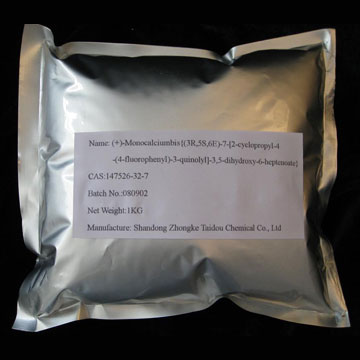

![4-[[[[6-[(Diethylamino)methyl]-2-naphthalenylmethoxy]carbonyllaminolbenzoic acid](https://eimg.pharmasources.com/image/20241206/xJCFsdgfMrHzqjtgeOixhGQHgVbKi7kAcoEqemzE.jpg)