PL-7
The intermediates of prulifloxacin.
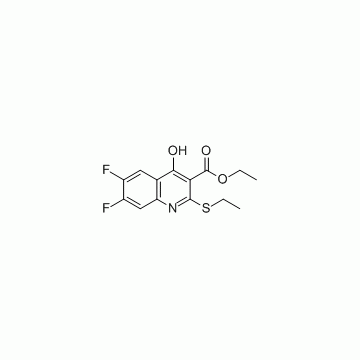
Molecular Formular: C14H13F2NO3S
Molecular Weight: 313.32
Welcome to contact: +86 18046216202 (Jessica)
+86 592 5789920 (Office Line)
*The following content is generated by AI and is for reference only.
Ethyl 6,7-difluoro-2-ethylmercapto-4-hydroxyquinoline-3-carboxylate is a specialized heterocyclic intermediate widely recognized in medicinal chemistry and pharmaceutical research. Its chemical structure features a quinoline core substituted with two fluorine atoms at the 6 and 7 positions, an ethylmercapto group at position 2, a hydroxyl group at position 4, and an ethyl ester moiety at position 3. This specific substitution pattern is critical for the synthesis of advanced fluoroquinolone antibiotics, which are potent broad-spectrum antimicrobial agents used to treat various bacterial infections.
The compound serves as a pivotal building block in the multi-step synthesis of novel fluoroquinolones. The presence of the difluoro moiety significantly enhances the binding affinity of the resulting drug molecules to DNA gyrase and topoisomerase IV, key enzymes required for bacterial DNA replication. Furthermore, the ethylmercapto group often acts as a leaving group or a precursor for further functionalization, allowing chemists to introduce diverse side chains that improve pharmacokinetic properties such as bioavailability and tissue penetration. While the exact CAS number may vary depending on specific salt forms or hydration states, this molecule is generally cataloged under standard organic intermediates used in fine chemical manufacturing.
In industrial applications, high-purity samples of this ester are essential for quality control and process development in antibiotic production facilities. Researchers utilize it to optimize reaction pathways, ensuring maximum yield and minimal byproduct formation during the cyclization and substitution steps typical of quinoline synthesis. Beyond its primary role in antibacterial drug development, derivatives of this scaffold are occasionally explored for potential anticancer and antiviral activities due to the unique electronic properties conferred by the halogenated quinoline system. However, its most prominent application remains within the realm of infectious disease therapeutics. Handling this compound requires standard laboratory safety precautions, as many fluoroquinolone precursors can be irritants or sensitizers. Overall, Ethyl 6,7-difluoro-2-ethylmercapto-4-hydroxyquinoline-3-carboxylate represents a cornerstone molecule in the ongoing evolution of effective antimicrobial therapies, bridging fundamental organic synthesis with critical public health needs.





 (All Rights Reserved)

![5,6,7,7a-Tetrahydro thieno[3,2-c]pyridin-2(4H)-one Hydrochloride](https://eimg.pharmasources.com/img_Cphi_en/Product/2016_02/Mimg_1602021058457992.jpg)