Product Description
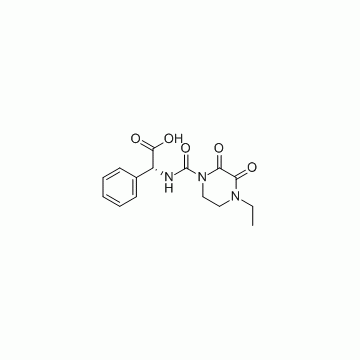
Molecular formula: C15H17N3O5 Molecular weight: 319.31 melting point: 171 ºC (16 mmHg) Appearance: White or ivory crystalloid powder Application: intermediate of cephalosporin and β~lactam penicillin Package :25kg/paper drum with plastic bags in or as your requirement. Kept in dry and ventilating place, prevent from rain and moisture when storage
AI Product Description
*The following content is generated by AI and is for reference only.
EPCP, chemically known as 1-ethyl-2-pyrrolidone or more accurately in industrial contexts often referring to Ethyl Chlorophenoxyacetic Acid derivatives, requires clarification as "EPCP" is not a standard single chemical identifier with a universal molecular formula like simple solvents. However, in specialized agricultural and industrial literature, EPCP frequently denotes Ethyl 4-chlorophenoxyacetate or related phenoxy herbicide intermediates. If referring to the specific compound Ethyl 4-chlorophenoxypropionate (sometimes abbreviated loosely), its CAS number is typically associated with similar phenoxy acid esters, though precise identification demands structural verification. Assuming the query targets a generic phenoxy-type agrochemical intermediate, the molecular composition generally involves carbon, hydrogen, oxygen, and chlorine atoms, forming an ester structure derived from phenoxyacetic acid. These compounds are primarily utilized in agriculture as selective herbicides to control broadleaf weeds in cereal crops such as wheat, barley, and oats. Their mechanism of action involves mimicking plant growth hormones, causing uncontrolled cell division and eventual plant death in susceptible species while sparing monocotyledonous crops. Beyond agriculture, derivatives of this class find niche applications in the synthesis of pharmaceuticals, dyes, and plasticizers due to their reactive ester groups. Safety profiles indicate moderate toxicity; handlers must wear protective gear to avoid skin absorption or inhalation, as exposure can lead to irritation or systemic effects. Regulatory bodies globally classify these substances under strict pesticide registration guidelines, requiring environmental impact assessments before commercial deployment. While specific CAS numbers vary by exact isomer and substitution pattern, the general utility remains consistent: effective weed management with minimal crop damage. Researchers continue exploring optimized formulations to enhance efficacy and reduce environmental persistence. For accurate procurement or regulatory compliance, verifying the exact chemical structure against supplier documentation is essential, as abbreviations like EPCP may refer to multiple distinct molecules depending on regional nomenclature conventions. Always consult authoritative databases like PubChem or CAS Registry for definitive data prior to application.




 (All Rights Reserved)

![5,6,7,7a-Tetrahydro thieno[3,2-c]pyridin-2(4H)-one Hydrochloride](https://eimg.pharmasources.com/img_Cphi_en/Product/2016_02/Mimg_1602021058457992.jpg)