Product Description
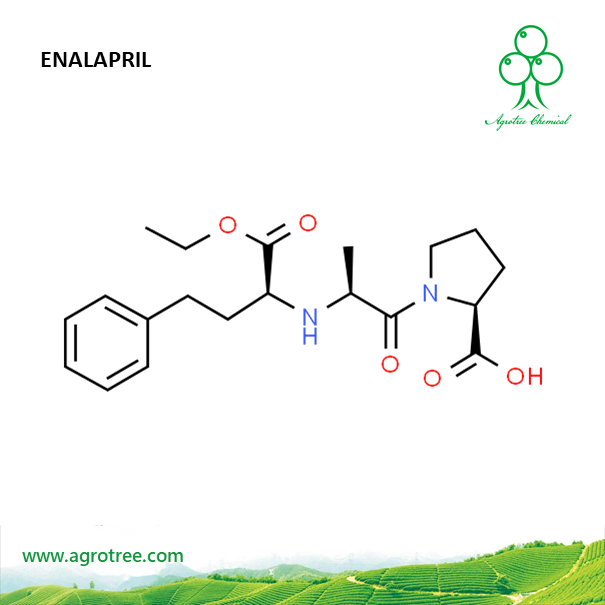
Enalapril is a prodrug belonging to the angiotensin-converting enzyme (ACE) inhibitor drug class that works on the renin-angiotensin-aldosterone system, which is responsible for the regulation of blood pressure and fluid and electrolyte homeostasis. Enalapril is an orally-active and long-acting nonsulphydryl antihypertensive agent that suppresses the renin-angiotensin-aldosterone system to lower blood pressure. It was developed from a targeted research programmed using molecular modelling.
AI Product Description
*The following content is generated by AI and is for reference only.
Enalapril is a widely prescribed angiotensin-converting enzyme (ACE) inhibitor used primarily in the management of hypertension and heart failure. Its chemical identity is defined by the molecular formula C20H28N2O5, and it is universally recognized by its CAS Registry Number 91332-80-4. As a prodrug, Enalapril itself possesses low pharmacological activity; upon oral administration, it undergoes rapid hydrolysis in the liver to form its active metabolite, enalaprilat. This conversion is crucial for its therapeutic efficacy, allowing the drug to effectively block the conversion of angiotensin I to angiotensin II, a potent vasoconstrictor. By inhibiting this process, Enalapril promotes vasodilation, reduces systemic vascular resistance, and lowers blood pressure without significantly affecting heart rate or renal perfusion in most patients.
The clinical applications of Enalapril are extensive and well-documented. It serves as a first-line therapy for essential hypertension, often used alone or in combination with diuretics like hydrochlorothiazide to achieve optimal blood pressure control. Furthermore, it plays a vital role in managing chronic heart failure by reducing cardiac afterload and preventing adverse ventricular remodeling, thereby improving survival rates and quality of life for affected individuals. The drug is also indicated for the treatment of asymptomatic left ventricular dysfunction following a myocardial infarction, helping to prevent the progression to overt heart failure. Additionally, Enalapril offers renoprotective benefits for patients with diabetic nephropathy, slowing the decline of renal function by reducing intraglomerular pressure.
While generally well-tolerated, Enalapril may cause side effects such as a persistent dry cough, hyperkalemia, or hypotension, particularly in volume-depleted patients. It is contraindicated in pregnant women due to the risk of fetal toxicity and in patients with a history of angioedema associated with ACE inhibitors. Despite these considerations, Enalapril remains a cornerstone in cardiovascular pharmacotherapy due to its proven efficacy, cost-effectiveness, and extensive safety profile established over decades of clinical use. Its versatility makes it an indispensable tool for physicians treating a broad spectrum of cardiovascular disorders globally.





















 (All Rights Reserved)