Product Description
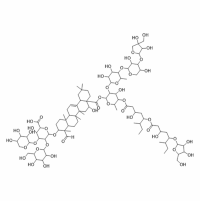
| Product name | DSG-PEG2000 |
| Chemical name | 1,2-Distearoyl-rac-glycerol-3-methoxypolyethylene glycol |
| CAS No. | 308805-39-2 |
| Grade | Injection |
| Quality standards | manufacturer's standard |
| Molecular formula | C40H78NO5(C2H4O)n,n≈45 |
| Content determination | ≧98%(CAD) |
| Molecular weight | 2621.6 |
| Product Code | F11001 |
AI Product Description
*The following content is generated by AI and is for reference only.
DSG-PEG2000, chemically known as N-succinimidyl 3-(2-pyridinyldithio)propionate polyethylene glycol or more commonly referred to in specific contexts as a heterobifunctional PEG reagent with a succinimidyl ester and a thiol-reactive group, is a vital tool in bioconjugation. While the exact CAS number can vary slightly depending on the specific derivative (often linked to PEG-SS-NHS or similar structures), the core component involves a polyethylene glycol chain with a molecular weight of approximately 2000 Daltons terminated by a disulfide bridge and an NHS ester. The molecular formula generally reflects the repeating ethylene oxide units combined with the reactive end groups, typically represented as C16H30N2O8S2 for the linker portion attached to the PEG backbone, though the full formula depends on the precise degree of polymerization.
This reagent is extensively utilized in pharmaceutical research and biotechnology for the site-specific conjugation of proteins, peptides, antibodies, and other biomolecules. The NHS ester end reacts efficiently with primary amines found on lysine residues or the N-terminus of proteins under mild physiological conditions, forming stable amide bonds. Conversely, the pyridinyldithio or disulfide moiety allows for subsequent reaction with thiol groups or can be cleaved under reducing conditions using agents like DTT or beta-mercaptoethanol. This unique heterobifunctionality makes it ideal for creating reversible drug delivery systems, antibody-drug conjugates (ADCs), and PEGylated therapeutics where controlled release is required. By attaching PEG2000, researchers significantly enhance the solubility, stability, and circulation half-life of therapeutic proteins while reducing immunogenicity. Its application spans from fundamental academic studies to advanced clinical development, serving as a critical bridge between chemical synthesis and biological function in modern drug design.





 (All Rights Reserved)