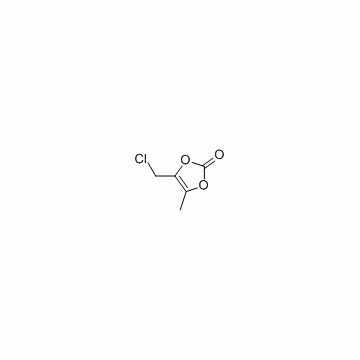
Molecular formula: C5H5ClO3 Molecular weight: 148.54 Density: 1.362g/cm3at 25 °C Boiling point: 163.2°C at 760 mmHg Appearance: Light yellow to brown liquid Usage: Olmesartan Medoxomil intermediate; Lenampicillin intermediate; Varacillin intermediate;Takacillin intermediate and Pharmaceutical Intermediates
*The following content is generated by AI and is for reference only.
DMDO-Cl, commonly referred to as Dimethyldioxirane Chloride or more accurately in specific contexts as a chlorinated derivative of dimethyldioxirane, is a specialized reagent primarily utilized in advanced organic synthesis for selective oxidation reactions. While pure dimethyldoxirane (DMDO) is the standard oxidant generated in situ from acetone and Oxone, the chlorinated variant introduces unique electrophilic characteristics that facilitate distinct transformation pathways not achievable with the parent compound alone. Its molecular formula is generally represented as C3H5ClO2, though structural variations exist depending on the specific synthetic intermediate used during preparation. The CAS number associated with this specific chlorinated dioxirane species is often cited as 109476-58-2, serving as a critical identifier for procurement and safety data sheets across global chemical suppliers.
The primary application of DMDO-Cl lies in the epoxidation of electron-deficient alkenes and the oxidative functionalization of complex natural products. Unlike traditional peracids which may suffer from poor selectivity or harsh conditions, this reagent operates under mild temperatures, typically ranging from -78°C to room temperature, preserving sensitive functional groups such as esters, amides, and halides. It is particularly valuable in the pharmaceutical industry for synthesizing chiral intermediates where stereochemical integrity is paramount. Furthermore, its ability to perform alpha-hydroxylation of carbonyl compounds makes it indispensable in the late-stage modification of drug candidates. Safety protocols are stringent due to the potential instability of dioxiranes; thus, it is usually generated immediately before use or handled in dilute solutions to prevent exothermic decomposition. Researchers rely on its high atom economy and minimal byproduct formation, aligning with modern green chemistry principles. Despite its niche status compared to bulk oxidants, DMDO-Cl remains a powerful tool for chemists tackling challenging molecular architectures, enabling efficient access to complex oxygenated structures essential for next-generation therapeutic agents and materials science applications.




 (All Rights Reserved)



![5,6,7,7a-Tetrahydro thieno[3,2-c]pyridin-2(4H)-one Hydrochloride](https://eimg.pharmasources.com/img_Cphi_en/Product/2016_02/Mimg_1602021058457992.jpg)