Product Description
|
Purity
|
≥99%
|
|
Specific Rotation
|
-103.5 ~ -104.5 degree
|
|
Melting Point
|
153~160 degree Celsius
|
|
Loss on Drying
|
Not more than 1.0%
|
|
Appearance
|
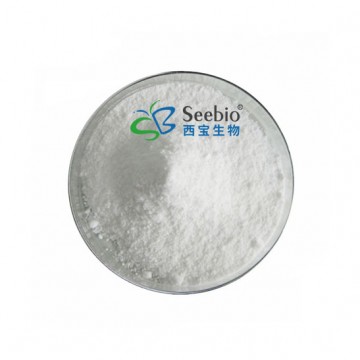
White crystalline, odorless
|
AI Product Description
*The following content is generated by AI and is for reference only.
D-Arabinose is a naturally occurring monosaccharide belonging to the pentose sugar family, specifically classified as an aldopentose. Its chemical structure consists of five carbon atoms, with the molecular formula C5H10O5 and a molecular weight of approximately 150.13 g/mol. The compound is identified by the CAS Registry Number 147-80-2. Unlike its more common counterpart, D-glucose, D-arabinose features a distinct stereochemical configuration at the second carbon position, which significantly influences its biological reactivity and metabolic pathways.
In terms of natural occurrence, D-arabinose is found in various plant sources, including fruit juices, tree gums, and certain hemicelluloses. It plays a crucial role in the biosynthesis of essential vitamins and nucleic acids within living organisms. While it is less abundant than other sugars like glucose or fructose, its unique structural properties make it highly valuable for specialized industrial and scientific applications. One of the primary uses of D-arabinose is in pharmaceutical research, where it serves as a key intermediate in the synthesis of antiviral drugs, particularly those targeting HIV and hepatitis. Additionally, it is utilized in the production of specific antibiotics and glycosides due to its ability to form stable glycosidic bonds.
Beyond medicine, D-arabinose finds application in the food and beverage industry as a low-calorie sweetener alternative, although its usage is limited compared to high-intensity sweeteners. In the realm of biotechnology, it acts as a substrate for studying bacterial metabolism and enzyme kinetics, providing researchers with insights into carbohydrate processing mechanisms. Furthermore, it is employed in analytical chemistry as a standard reference material for calibrating chromatographic instruments. The compound is generally available in crystalline powder form, ensuring stability during storage and handling. Due to its specific optical rotation and solubility characteristics, D-arabinose remains an indispensable reagent in organic synthesis laboratories worldwide. Its versatility underscores the importance of this simple yet complex molecule in advancing both theoretical science and practical manufacturing processes across diverse sectors.



 (All Rights Reserved)