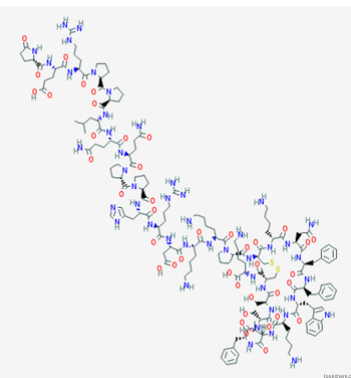
Cortex inhibition - 29 is a new family of somatostatin neuroendocrine peptides, play regulating neuroendocrine function in the organism, induction of immune tolerance and to inhibit the action of the inflammatory response.
Cortex inhibition - 29 is a polypeptide with annular structure, physiological activity with a long time.
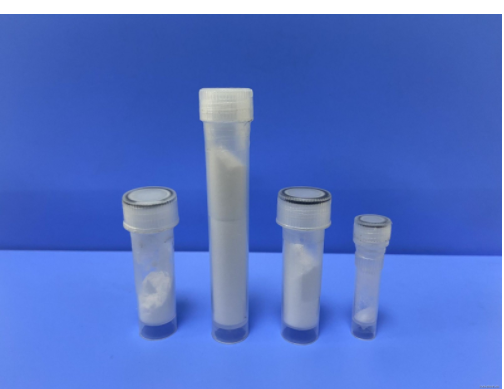
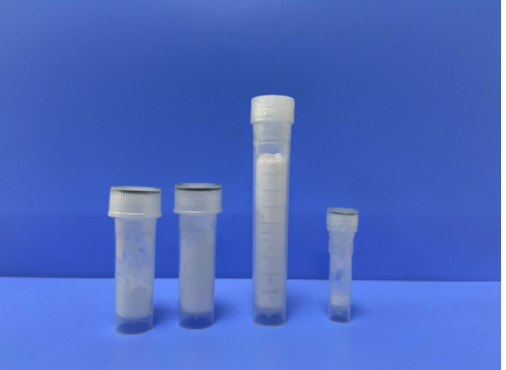
Storage: - 20 ℃ under freeze dry, avoid light preservation remark: used only for research, not for human body
*The following content is generated by AI and is for reference only.
Cortistatin-29 (rat) is a bioactive neuropeptide derived from the corticotropin-releasing factor (CRF) precursor, specifically identified in rat models. This peptide serves as a potent endogenous antagonist to CRF receptors, playing a critical role in modulating the hypothalamic-pituitary-adrenal (HPA) axis and stress responses. Unlike its counterpart Corticotropin-Releasing Hormone (CRH), which typically stimulates stress pathways, Cortistatin-29 exerts inhibitory effects, helping to restore homeostasis during physiological stress.
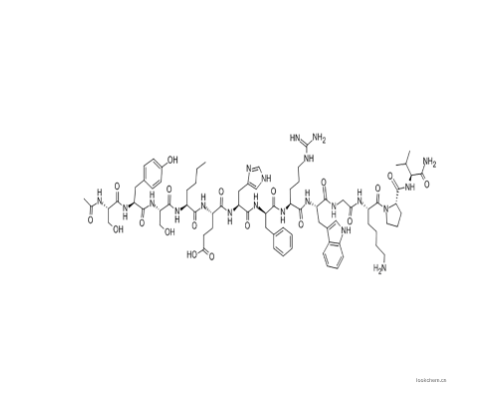
The molecular formula of Cortistatin-29 (rat) is C138H216N40O38S2, with a calculated molecular weight of approximately 3,056.7 Da. Its specific CAS registry number is 142753-07-7, ensuring precise identification for research and procurement purposes. Structurally, it consists of 29 amino acid residues, featuring a unique sequence that distinguishes it from other members of the CRF family. The presence of sulfur atoms indicates disulfide bridges essential for maintaining its tertiary structure and biological activity.
In scientific research, this compound is primarily utilized as a pharmacological tool to investigate the mechanisms underlying stress-related disorders, anxiety, depression, and neuroinflammation. Researchers employ Cortistatin-29 to study receptor binding affinities, signal transduction pathways, and the regulatory feedback loops within the central nervous system. By blocking CRF-induced activation, it aids in understanding how the body regulates cortisol release and emotional behavior. Furthermore, studies suggest potential therapeutic applications for conditions involving HPA axis hyperactivity, such as post-traumatic stress disorder (PTSD) and chronic fatigue syndrome.
As a synthetic or recombinant peptide product, Cortistatin-29 (rat) is supplied in high purity for in vitro and in vivo experiments. It is commonly dissolved in appropriate buffers for administration via intracerebroventricular injection or systemic routes in rodent models. While not currently an approved clinical drug, its discovery has significantly advanced our understanding of neuroendocrinology. Continued investigation into Cortistatin-29 holds promise for developing novel anxiolytic agents and treatments for mood disorders, highlighting its importance in modern biomedical science.





 (All Rights Reserved)

![8,16-Diazadispiro[6.1.6.2]heptadecan-17-one](https://eimg.pharmasources.com/image/product/20250403/ca91cba8b87e53fc879f8d8764873a40jpg)
![6,8-Dioxo-5,7-diazaspiro[3.4]octane-2-carboxylic acid](https://eimg.pharmasources.com/image/product/20250403/02effeb5a7639bc84ff1f3add3c0c64fjpg)
![8-Oxa-1,3-diazaspiro[4.5]decane-2,4-dione](https://eimg.pharmasources.com/image/product/20250403/60fa7223d5a34f24138486ceea0ffb15jpg)
