Product Description
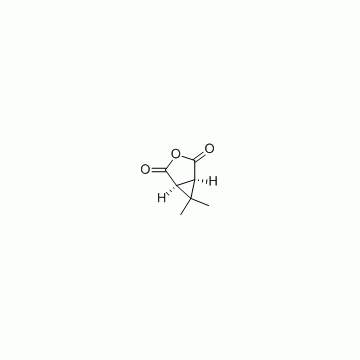
MF: C7H8O3 MW: 140.14 Density: 1.274 g/mL at 25 °C 、 Boiling point: 246 °C (20 mmHg) Flash point: 113 °C Appearance: white or almost white crystal Packing: 25kg/drum Assay: 98.0—102.0% Application: As boceprevir intermediate
AI Product Description
*The following content is generated by AI and is for reference only.
Caronic anhydride, chemically known as 1,2-cyclohexanedicarboxylic anhydride (often associated with the CAS number 5904-36-7 for the specific cis/trans isomer mixtures used industrially), is a versatile cyclic organic compound derived from the dehydration of caronic acid. This white to off-white crystalline solid serves as a crucial intermediate in the synthesis of high-performance polymers and specialty chemicals. Its unique cyclic structure imparts rigidity and thermal stability to the final products, making it highly valuable in advanced material science applications.
The primary industrial application of caronic anhydride lies in the production of polyester resins and polyimides. When reacted with diols or diamines, it forms robust copolymers that exhibit exceptional resistance to heat, chemicals, and mechanical stress. These materials are extensively utilized in the manufacturing of high-temperature coatings, adhesives, and encapsulants for the electronics industry, particularly for protecting sensitive components in automotive and aerospace sectors. Furthermore, caronic anhydride acts as a key building block for synthesizing chelating agents and complexing agents used in water treatment and metal purification processes due to its ability to form stable complexes with various metal ions.
In the pharmaceutical and agrochemical fields, this anhydride serves as a precursor for synthesizing active pharmaceutical ingredients (APIs) and bioactive heterocycles. Its reactivity allows for efficient ring-opening reactions, facilitating the construction of complex molecular architectures required for drug development. Additionally, it finds use in the production of plasticizers and lubricant additives, where its structural integrity enhances the performance of fluids under extreme operating conditions. The compound is typically handled with standard safety precautions, including the use of personal protective equipment, as it can cause irritation upon contact with skin or eyes. As global demand grows for lightweight, durable, and thermally stable materials, caronic anhydride remains an indispensable component in the chemical supply chain, driving innovation across multiple high-tech industries while maintaining a balance between performance and cost-effectiveness in large-scale manufacturing processes.




 (All Rights Reserved)

![5,6,7,7a-Tetrahydro thieno[3,2-c]pyridin-2(4H)-one Hydrochloride](https://eimg.pharmasources.com/img_Cphi_en/Product/2016_02/Mimg_1602021058457992.jpg)