Product Description
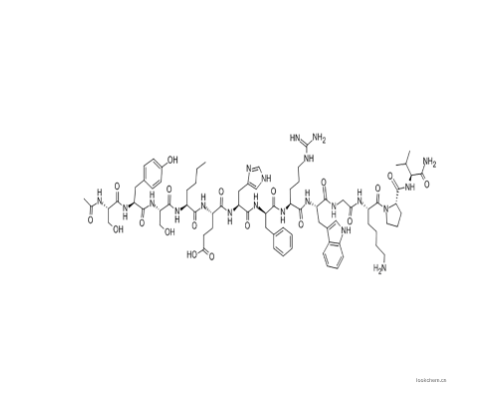
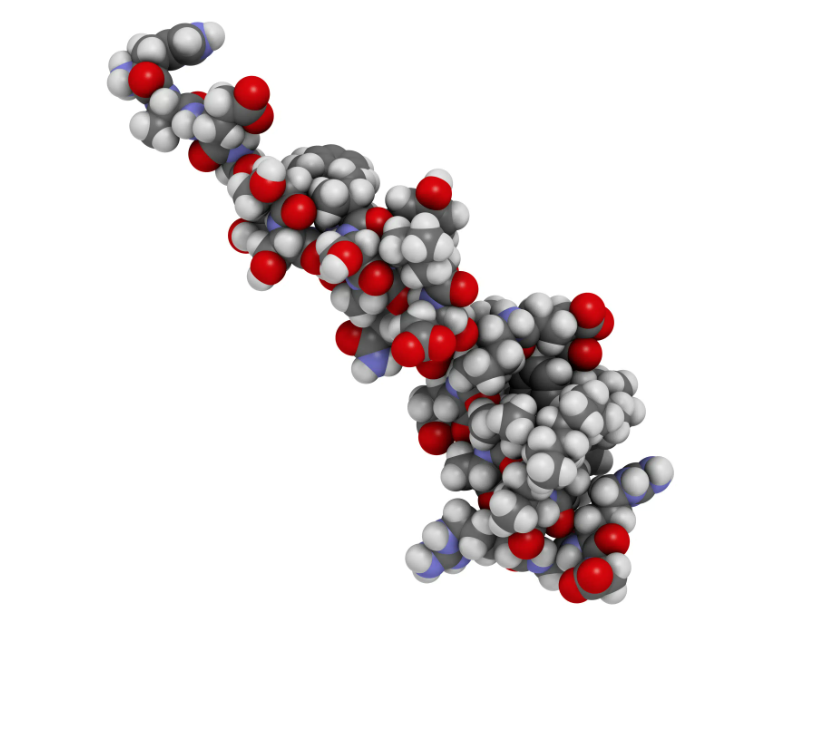
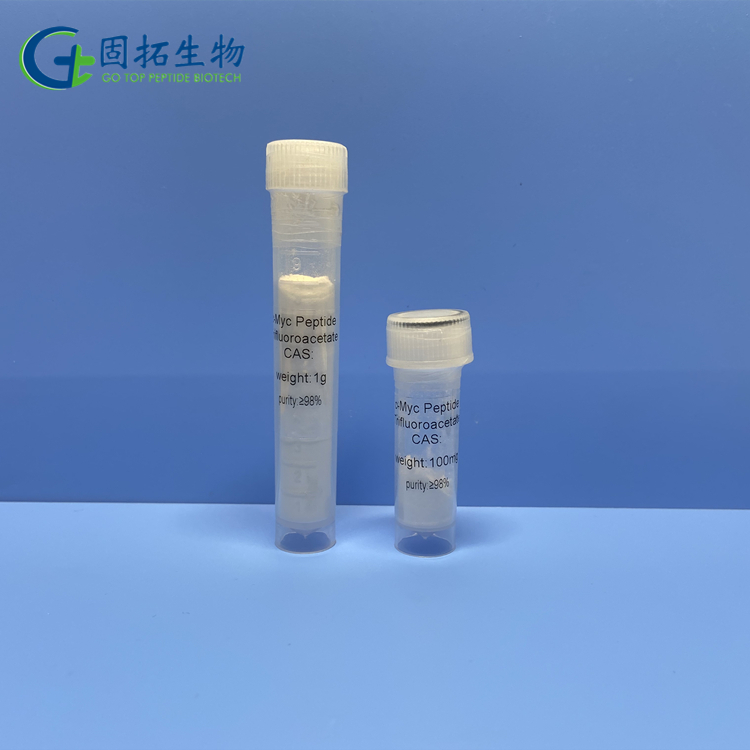
c-Myc Peptide Trifluoroacetate is a peptide corresponding to the C-terminal amino acids (410-419) of human c-myc protein. It is composed of 10 amino acids condensed and participates in the regulation of the transcription process of growth-related genes in the organism. The c-Myc Peptide Trifluoroacetate sequence contains more acidic amino acids, and the peptide has good water solubility.
AI Product Description
*The following content is generated by AI and is for reference only.
C-Myc Peptide Trifluoroacetate is a high-purity synthetic peptide derivative widely utilized in biomedical research, specifically focusing on the study of cellular proliferation and oncogenesis. The C-Myc protein, encoded by the *MYC* proto-oncogene, plays a critical role in regulating cell cycle progression, apoptosis, and cellular transformation. Dysregulation of c-Myc is frequently associated with various human malignancies, making its functional domains essential targets for drug discovery and mechanistic studies. This specific product represents a defined peptide segment of the c-Myc protein, stabilized as a trifluoroacetate (TFA) salt to ensure solubility and stability during storage and experimental application.
The chemical composition of this reagent typically includes the amino acid sequence corresponding to a specific functional region of c-Myc, such as the transactivation domain or the nuclear localization signal, coupled with TFA counterions which facilitate purification via reverse-phase HPLC. While exact molecular formulas vary depending on the specific amino acid sequence synthesized, the presence of the trifluoroacetate moiety is consistent across batches. Researchers utilize this peptide primarily for epitope mapping, antibody generation, and inhibition assays to understand how c-Myc interacts with transcription factors like Max. Furthermore, it serves as a standard control in mass spectrometry analyses and immunoprecipitation experiments where precise quantification of c-Myc activity is required.
In therapeutic contexts, understanding the structure-activity relationship of c-Myc peptides aids in designing small molecule inhibitors that disrupt the c-Myc/Max heterodimerization, a key step in oncogenic signaling. The TFA form is preferred over free bases because it prevents aggregation and ensures the peptide remains soluble in aqueous buffers commonly used in cell culture and biochemical assays. Laboratories employing this reagent must handle it with care, adhering to standard laboratory safety protocols regarding organic salts. By providing a reliable source of the c-Myc peptide fragment, scientists can accelerate investigations into cancer biology, potentially leading to novel diagnostic markers and targeted therapies for tumors driven by MYC amplification. Its availability allows for reproducible data generation across global research facilities studying the complex regulatory networks governing cell growth and differentiation.





 (All Rights Reserved)