Product Description
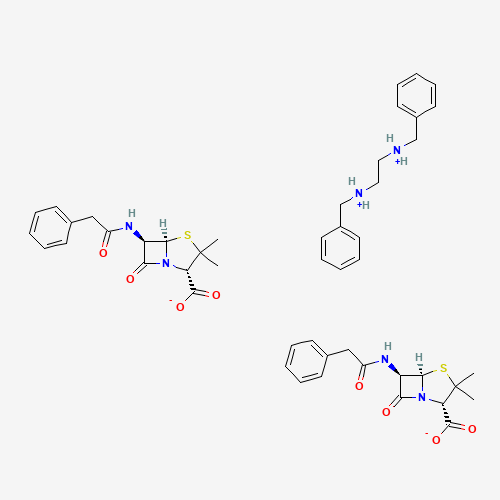
Benzylpenicillin benzathine is a benzathine(2+) salt in which the counter anions are benzylpenicillin(1-). Drug-of-choice when prolonged low concentrations of benzylpenicillin are required and appropriate. It contains a benzylpenicillin(1-).
Semisynthetic antibiotic prepared by combining the sodium salt of penicillin G with N,N'-dibenzylethylenediamine.
AI Product Description
*The following content is generated by AI and is for reference only.
Benzathine benzylpenicillin, also known as benzathine penicillin G, is a long-acting antibiotic formulation derived from the penicillin class of beta-lactam antibiotics. Its chemical identity is defined by the molecular formula C34H48N6Na2O10S2 and the CAS registry number 11106-95-7. This compound is essentially a complex formed between benzylpenicillin (penicillin G) and the organic base benzathine, which acts to significantly retard the release of the active drug into the systemic circulation.
The primary clinical utility of benzathine benzylpenicillin lies in its extended duration of action, providing therapeutic blood levels for up to four weeks following a single intramuscular injection. This pharmacokinetic profile makes it the treatment of choice for conditions requiring prolonged low-level antibiotic exposure. It is widely regarded as the gold standard for treating early syphilis caused by *Treponema pallidum*, ensuring effective eradication of the spirochete with minimal patient burden. Furthermore, it serves as a critical prophylactic agent for preventing rheumatic fever recurrences in patients with a history of rheumatic heart disease, thereby reducing morbidity associated with recurrent streptococcal infections. The drug is also utilized in managing certain skin and soft tissue infections caused by susceptible streptococci when oral therapy is not feasible or adherence is a concern.
Mechanistically, the molecule functions by inhibiting bacterial cell wall synthesis. It binds to penicillin-binding proteins, disrupting peptidoglycan cross-linking, which leads to cell lysis and death. Due to its slow absorption, it is not suitable for acute, severe infections where immediate high plasma concentrations are required; however, its sustained release mechanism offers unparalleled convenience for chronic management and prevention strategies. While generally well-tolerated, hypersensitivity reactions remain a significant consideration, necessitating careful patient screening prior to administration. Overall, benzathine benzylpenicillin remains an indispensable tool in global public health initiatives, particularly in resource-limited settings where multi-dose regimens are difficult to manage.





 (All Rights Reserved)