Product Description
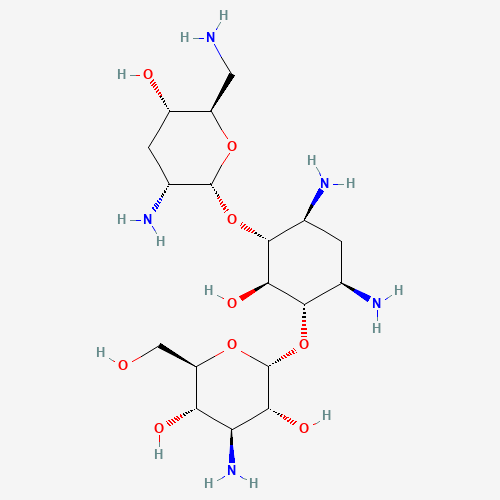
Tobramycin is a amino cyclitol glycoside that is kanamycin B lacking the 3-hydroxy substituent from the 2,6-diaminoglucose ring. It has a role as an antibacterial agent, an antimicrobial agent and a toxin. It is functionally related to a kanamycin B. It is a conjugate base of a tobramycin(5+).
AI Product Description
*The following content is generated by AI and is for reference only.
Tobramycin is a potent aminoglycoside antibiotic derived from the soil bacterium *Streptomyces tenebrarius*. Chemically, it belongs to the 2-deoxystreptamine class and functions by irreversibly binding to the 30S ribosomal subunit of bacteria. This interaction disrupts protein synthesis, leading to the production of non-functional proteins and ultimately causing bacterial cell death. Its molecular formula is C18H37N5O9, and it is uniquely identified by the CAS registry number 32986-56-4. Structurally, Tobramycin differs slightly from other aminoglycosides like gentamicin or kanamycin, which contributes to its specific spectrum of activity and resistance profile.
The primary clinical application of Tobramycin is in treating serious infections caused by susceptible Gram-negative aerobic bacteria. It is particularly effective against *Pseudomonas aeruginosa*, a pathogen notorious for causing hospital-acquired infections, as well as *Escherichia coli*, *Klebsiella pneumoniae*, and *Proteus* species. Due to its efficacy against multidrug-resistant strains, it is frequently used in combination with beta-lactam antibiotics for severe systemic infections such as sepsis, complicated urinary tract infections, intra-abdominal infections, and respiratory infections in patients with cystic fibrosis. In the context of cystic fibrosis, nebulized Tobramycin is a standard therapy to reduce lung bacterial load and improve pulmonary function. Additionally, topical formulations including eye drops and ointments are widely prescribed for bacterial conjunctivitis and blepharitis.
Despite its therapeutic value, Tobramycin carries significant risks, primarily nephrotoxicity (kidney damage) and ototoxicity (hearing loss), necessitating careful monitoring of serum drug levels and renal function during prolonged therapy. Resistance can develop through enzymatic modification of the drug molecule, though it remains less common than with some other aminoglycosides. As a broad-spectrum agent, Tobramycin plays a critical role in modern antimicrobial stewardship programs, serving as a vital option when first-line treatments fail or when dealing with resistant pathogens. Its unique chemical structure ensures it remains a cornerstone in the management of life-threatening Gram-negative infections globally.













 (All Rights Reserved)