Product Description
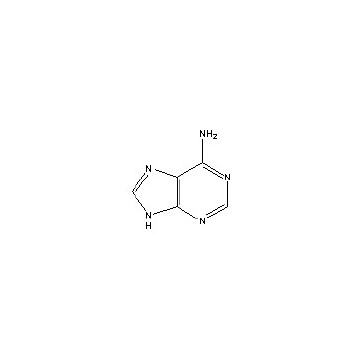
Product Name: Adenine
CAS No.: 75-24-5
Welcome to contact: Jessica
+86-592-5789920(Office Line)
+86-592-5637388(Fax)
+86-18046216202 (Tel)
ouya.jessica(Skype)
AI Product Description
*The following content is generated by AI and is for reference only.
Adenine, a fundamental purine nucleobase, serves as a critical building block for genetic material and energy transfer molecules in all living organisms. Its chemical formula is C5H5N5, reflecting its structure composed of five carbon atoms, five hydrogen atoms, and five nitrogen atoms arranged in a fused pyrimidine and imidazole ring system. The substance is widely recognized by the Chemical Abstracts Service (CAS) Registry Number 73-24-5, ensuring precise identification across global scientific databases and regulatory frameworks.
In nature, adenine pairs with thymine in DNA and uracil in RNA, forming the backbone of hereditary information storage and transmission. Beyond genetics, it plays an indispensable role in cellular metabolism as a key component of adenosine triphosphate (ATP), the primary energy currency of cells, and adenosine diphosphate (ADP). It also participates in signaling pathways through cyclic AMP (cAMP) and acts as a precursor for coenzymes like NAD+ and FAD. Industrially and academically, adenine is extensively utilized in biochemical research to study metabolic disorders, genetic mutations, and enzyme kinetics. Pharmaceutical applications include its use in synthesizing antiviral drugs such as acyclovir and treating certain metabolic deficiencies. In biotechnology, it supports cell culture media formulations, particularly for mammalian and bacterial growth, where it ensures optimal nucleotide synthesis. Adenine is typically supplied as a white to off-white crystalline powder, highly soluble in hot water but sparingly soluble in cold water and organic solvents. Its purity grades vary from reagent grade for laboratory analysis to high-purity forms required for clinical trials. Due to its essential biological functions, adenine remains a cornerstone compound in molecular biology, pharmacology, and nutritional science. Researchers rely on its consistent quality to validate experimental results regarding gene expression, protein synthesis, and energy dynamics. As a standard reference material, it aids in calibrating analytical instruments and validating diagnostic assays. With no known carcinogenic properties under normal handling conditions, it is considered safe when used according to established safety protocols. Ongoing studies continue to explore its potential in regenerative medicine and targeted drug delivery systems, highlighting its enduring relevance in advancing human health and scientific understanding of life processes at the molecular level.



 (All Rights Reserved)

![5,6,7,7a-Tetrahydro thieno[3,2-c]pyridin-2(4H)-one Hydrochloride](https://eimg.pharmasources.com/img_Cphi_en/Product/2016_02/Mimg_1602021058457992.jpg)