Product Description
|
Molecular Formula:
|
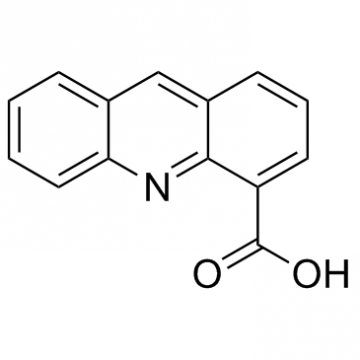
C14H10BrN
|
|
CAS No.:
|
1556-34-9
|
|
Appearance:
|
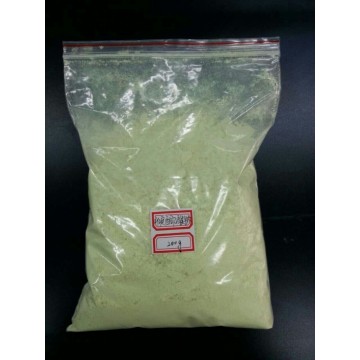
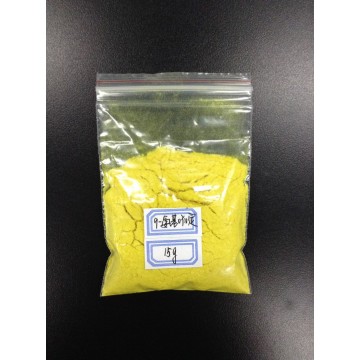
Yellow crystaline powder
|
|
Assay:
|
98%
|
|
Synonyms:
|
9-Bromomethylacridine;9-(bromomethyl)-
|
Application:
·9-(Bromomethyl)acridine is an HPLC derivatizing agent used for fluorescent labeling of carboxylic acid.
AI Product Description
*The following content is generated by AI and is for reference only.
9-(Bromomethyl)acridine, identified by CAS Registry Number 1556-34-9, is a specialized organic halide compound widely utilized in the fields of medicinal chemistry and materials science. Its molecular formula is C₁₄H₁₀BrN, reflecting a structure where a bromomethyl group (-CH₂Br) is substituted at the ninth position of the acridine ring system. This specific substitution pattern endows the molecule with unique reactivity, making it an invaluable building block for synthesizing complex heterocyclic architectures.
The primary application of 9-(Bromomethyl)acridine lies in its role as a key electrophilic intermediate in nucleophilic substitution reactions. Due to the high reactivity of the benzylic bromide moiety, it readily reacts with various nucleophiles such as amines, thiols, and alcohols to form diverse derivatives. This versatility allows chemists to construct libraries of compounds with potential biological activities, including anticancer, antiviral, and antimicrobial properties. Acridine derivatives are historically significant in the development of intercalating agents that bind to DNA, and the bromomethyl variant serves as a precursor for attaching functional groups that modulate these interactions.
Beyond pharmaceutical research, this compound finds utility in the development of fluorescent probes and dyes. The acridine core possesses strong fluorescence characteristics, which can be tuned through derivatization using 9-(Bromomethyl)acridine. These modified structures are employed in bioimaging, sensing applications, and the study of cellular processes. Furthermore, in material science, it acts as a monomer or linker for creating conductive polymers and metal-organic frameworks (MOFs), contributing to advancements in optoelectronics and catalysis.
Handling requires standard safety precautions due to its potential irritant properties and environmental hazards associated with halogenated organics. It should be stored in a cool, dry place away from light and moisture to prevent decomposition. As a high-value fine chemical, 9-(Bromomethyl)acridine remains essential for researchers seeking to expand the structural diversity of nitrogen-containing heterocycles for both academic inquiry and industrial innovation. Its availability facilitates the rapid synthesis of novel agents targeting unmet medical needs and advanced technological solutions.





 (All Rights Reserved)


![5,6,7,7a-Tetrahydro thieno[3,2-c]pyridin-2(4H)-one Hydrochloride](https://eimg.pharmasources.com/img_Cphi_en/Product/2016_02/Mimg_1602021058457992.jpg)