Product Description
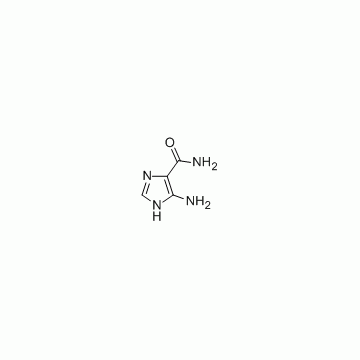
Molecular formula: C4H6N4O Molecular weight: 126.12 Density: 1.538g/cm3at 25 °C Melting point: 169~ 173 °C Refractive index: 1.673 Appearance: White or off-white crystal powder Application : Orazamide,dacarbazine intermediate
AI Product Description
*The following content is generated by AI and is for reference only.
5-Amino-4-imidazolecarboxamide, chemically known as 4-aminoimidazole-5-carboxamide or AICAR, is a pivotal intermediate in purine biosynthesis and a potent metabolic modulator widely utilized in biochemical research. Its molecular formula is C4H6N4O, and it carries the CAS registry number 2983-10-4. This compound serves as a critical precursor for the synthesis of adenosine monophosphate (AMP) and plays an essential role in the de novo purine pathway by acting as the substrate for phosphoribosyltransferase enzymes. In cellular metabolism studies, AICAR functions as an AMP-activated protein kinase (AMPK) activator. Upon entering cells, it is phosphorylated to ZMP, which mimics the structural properties of AMP, thereby triggering AMPK signaling cascades without requiring actual energy depletion. This unique mechanism has made AICAR a valuable tool for investigating metabolic regulation, glucose uptake, fatty acid oxidation, and mitochondrial biogenesis. Researchers frequently employ this molecule to model exercise-induced metabolic adaptations, exploring its potential therapeutic implications for insulin resistance, type 2 diabetes, and obesity. Furthermore, due to its involvement in nucleotide salvage pathways, AICAR is used in studies concerning DNA repair mechanisms and cellular stress responses. While primarily a research reagent, its ability to enhance endurance performance in animal models has drawn significant attention from sports science communities, although its use in human athletics remains restricted by regulatory bodies. The compound typically appears as a white to off-white crystalline powder, soluble in water and polar organic solvents, facilitating its application in various assay systems. Despite its biological significance, handling requires standard laboratory safety precautions, as high concentrations can induce cytotoxicity in certain cell lines. Overall, 5-Amino-4-imidazolecarboxamide stands as an indispensable chemical probe for elucidating complex metabolic networks and developing novel interventions for metabolic disorders. Its versatility bridges fundamental biochemistry with translational medicine, offering insights into how cellular energy sensors regulate systemic homeostasis. Continued investigation into its pharmacokinetics and long-term effects promises to expand its utility beyond basic research into potential clinical applications.




 (All Rights Reserved)



![5,6,7,7a-Tetrahydro thieno[3,2-c]pyridin-2(4H)-one Hydrochloride](https://eimg.pharmasources.com/img_Cphi_en/Product/2016_02/Mimg_1602021058457992.jpg)