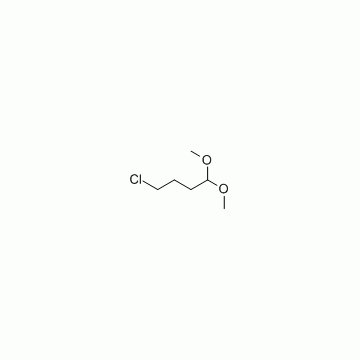
Molecular Formula: C6H13C102
Molecular Weight: 152.62
Welcome to contact: +86-18046216202 (Jessica)
+86-592 5789920 (Office Line)
*The following content is generated by AI and is for reference only.
4-Chlorobutanal dimethyl acetal is a specialized organic intermediate widely utilized in the pharmaceutical and fine chemical industries. With the Chemical Abstracts Service (CAS) registry number 5396-78-1, this compound features the molecular formula C6H13ClO2. Structurally, it consists of a four-carbon chain where the aldehyde functionality at the first position is protected as a dimethyl acetal, while a chlorine atom is substituted at the terminal carbon. This unique configuration makes it an invaluable building block for synthetic chemists seeking to introduce specific functional groups or extend carbon chains with precision.
The primary application of 4-chlorobutanal dimethyl acetal lies in its role as a precursor for synthesizing heterocyclic compounds and complex drug molecules. The chloro group serves as a versatile leaving group, facilitating nucleophilic substitution reactions that are essential for constructing nitrogen-containing rings such as piperidines and morpholines. Simultaneously, the acetal moiety provides stability to the aldehyde group during various reaction conditions, preventing unwanted side reactions like oxidation or polymerization. Once the desired molecular framework is assembled, the acetal can be selectively hydrolyzed under acidic conditions to regenerate the reactive aldehyde, allowing for further derivatization.
Beyond pharmaceutical synthesis, this reagent finds utility in the development of agrochemicals and advanced materials. Its ability to act as a linker between different molecular segments enhances its versatility in creating novel bioactive agents. In laboratory settings, researchers often employ this compound to explore structure-activity relationships (SAR) by modifying the alkyl chain length or substituent patterns. Due to its sensitivity to moisture and strong acids, proper storage under inert atmospheres is recommended to maintain purity and efficacy. Overall, 4-chlorobutanal dimethyl acetal represents a critical tool in modern organic synthesis, enabling the efficient production of high-value chemicals with diverse industrial applications ranging from medicinal chemistry to material science.





 (All Rights Reserved)
![5,6,7,7a-Tetrahydro thieno[3,2-c]pyridin-2(4H)-one Hydrochloride](https://eimg.pharmasources.com/img_Cphi_en/Product/2016_02/Mimg_1602021058457992.jpg)