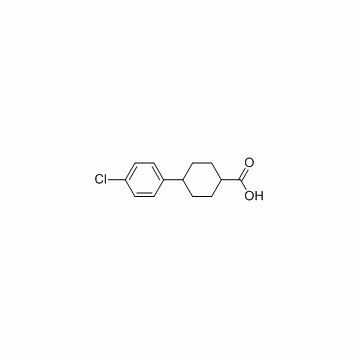
Molecular formula: C13H15ClO2 Molecular weight: 238.71 Density: 1.225g/cm3at 25 °C Melting point:252-262 °C Boiling point: 387.1ºC (16 mmHg) Refractive index: 1.561 Appearance: White or off-white crystal powder Hardly soluble in methanol, acetone, slightly soluble in alcohol, insoluble in water Application : Atovaquone intermediate
*The following content is generated by AI and is for reference only.
4-(4-Chlorophenyl)cyclohexanecarboxylic acid is a specialized organic intermediate widely utilized in the pharmaceutical and agrochemical industries. With the molecular formula C13H15ClO2 and a CAS registry number of 60789-84-2, this compound features a cyclohexane ring substituted with both a carboxylic acid group and a para-chlorophenyl moiety. The presence of the chlorophenyl group imparts specific lipophilic characteristics and metabolic stability, making it an ideal scaffold for drug discovery programs aiming to modulate biological activity.
In synthetic chemistry, this molecule serves as a crucial building block for the preparation of complex heterocyclic structures and bioactive compounds. It is frequently employed in the synthesis of non-steroidal anti-inflammatory drugs (NSAIDs), antihypertensive agents, and various central nervous system modulators. The carboxylic acid functionality allows for easy derivatization into esters, amides, or acid chlorides, facilitating diverse coupling reactions essential for constructing target molecules with high potency and selectivity. Furthermore, its structural similarity to certain natural products makes it valuable for structure-activity relationship (SAR) studies, helping medicinal chemists optimize lead compounds for improved pharmacokinetic profiles.
Beyond pharmaceutical applications, derivatives of 4-(4-chlorophenyl)cyclohexanecarboxylic acid have shown potential in the development of novel herbicides and fungicides. The chlorine atom on the phenyl ring often enhances the interaction with specific enzyme active sites in pests, thereby increasing efficacy at lower concentrations. Researchers also explore its utility in material science, particularly in the design of functional polymers where rigid cyclic structures contribute to thermal stability and mechanical strength. Despite its niche status, the compound remains a staple in fine chemical catalogs due to its versatility and the breadth of its potential applications across multiple scientific disciplines. As global demand for targeted therapies grows, intermediates like this continue to play a pivotal role in accelerating the pipeline from laboratory synthesis to commercial therapeutic solutions.




 (All Rights Reserved)





![5,6,7,7a-Tetrahydro thieno[3,2-c]pyridin-2(4H)-one Hydrochloride](https://eimg.pharmasources.com/img_Cphi_en/Product/2016_02/Mimg_1602021058457992.jpg)
