Product Description
The chamfering design of bottle mouth and cap has been strictly tested to ensure no liquid leakage;
No DNA / RNA enzyme, no heat source and no endotoxin, meeting USP class VI standard;
Recommended Operating temperature: PET:- 70 ℃ ~ 120 ℃, PETG: - 60 ℃~81 ℃b
AI Product Description
*The following content is generated by AI and is for reference only.
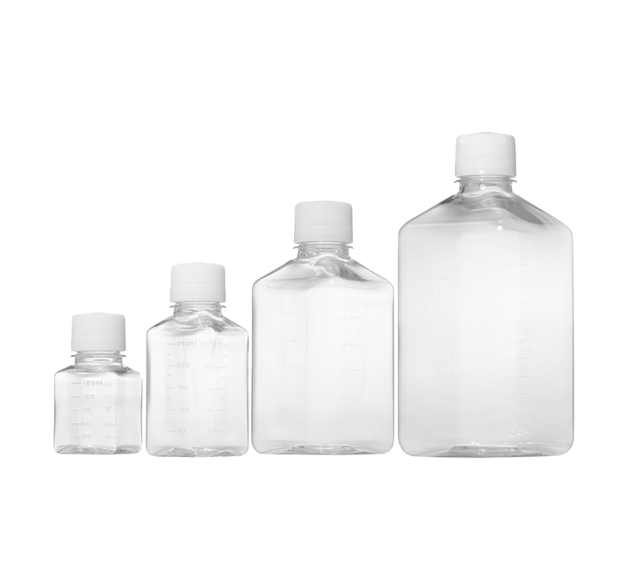
The product in question is a sterile, square-shaped polyethylene terephthalate (PET) container designed for laboratory and medical applications. Its primary function is to safely store, transport, and dispense liquid media, reagents, or biological samples without the risk of contamination. The square geometry offers distinct advantages over traditional round bottles, particularly regarding space efficiency during storage and transportation. By minimizing wasted air gaps within racks, coolers, or incubators, these containers maximize capacity while maintaining structural integrity under various environmental conditions.
Constructed from high-quality PET material, the bottle provides an excellent barrier against moisture and gases, ensuring the stability of sensitive contents over extended periods. The sterilization process guarantees that the vessel is free from pyrogens, endotoxins, and microorganisms, making it ideal for cell culture, microbiology, and diagnostic testing where aseptic techniques are paramount. The transparent nature of the plastic allows for easy visual inspection of the liquid level and clarity, facilitating quick identification and monitoring without opening the seal.
Several critical precautions must be observed when handling these containers. First, although durable, PET has specific temperature limitations; exposure to extreme heat can cause deformation or release of chemicals, so autoclaving should only be performed if explicitly rated for such processes by the manufacturer. Second, users must avoid using sharp instruments near the bottle walls to prevent punctures that could compromise sterility. Third, when transferring liquids, ensure the cap is securely tightened immediately after use to prevent evaporation or accidental spillage. Additionally, these bottles are generally intended for single-use applications in clinical settings to maintain strict hygiene standards, though some may be suitable for limited reuse in non-critical environments depending on local protocols. Proper disposal according to biohazard guidelines is essential after use with biological materials. Overall, this specialized packaging solution balances safety, efficiency, and reliability for modern scientific workflows.





 (All Rights Reserved)