Product Description
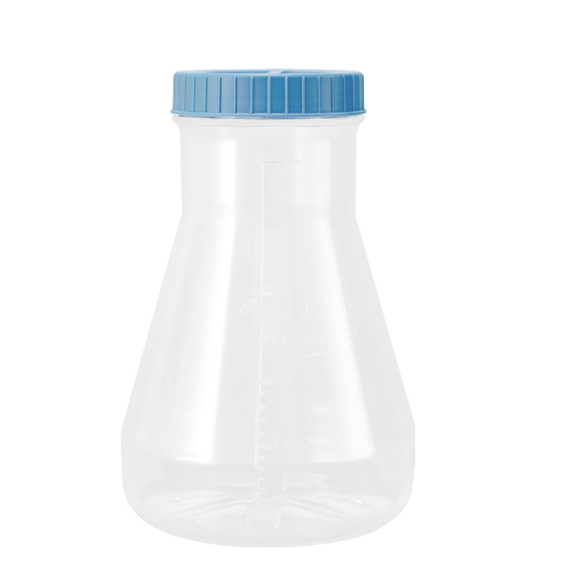
Conical culture flasks (referred to as shake flasks) are ideal for medium preparation, mixing and
storage, mainly for culturing cytoplasms with high oxygen requirements, but also for culturing
bacteria, fungi, animal and plant cells in suspension.
AI Product Description
*The following content is generated by AI and is for reference only.
Erlenmeyer shake flasks are essential laboratory vessels widely utilized in microbiology, cell biology, and biotechnology for the cultivation of microorganisms and mammalian cells. Designed with a conical body and narrow neck, these flasks facilitate efficient mixing while minimizing the risk of spillage during agitation. The primary function is to support aerobic growth by maximizing the surface area-to-volume ratio, allowing optimal oxygen transfer from the headspace into the liquid medium. When placed on orbital shakers, the fluid dynamics create a rolling motion that ensures uniform distribution of nutrients and gases throughout the culture, promoting rapid and healthy cell proliferation.
Constructed typically from transparent borosilicate glass or durable polycarbonate, these containers offer excellent chemical resistance and thermal stability. Polycarbonate variants are particularly favored for their shatterproof nature, making them ideal for high-throughput screening and automated liquid handling systems where breakage risks must be minimized. The standard design includes a screw cap equipped with a breathable membrane, which permits gas exchange while preventing contamination from airborne microbes and maintaining sterility over extended incubation periods. This feature is critical for long-term experiments requiring precise environmental control.
Users must adhere to several safety and operational guidelines to ensure experimental integrity. First, always verify that the flask material is compatible with the specific chemicals and solvents used in the experiment to prevent degradation or leaching. Second, avoid overfilling; filling no more than 20% to 30% of the total volume is recommended to allow sufficient headspace for oxygenation and prevent foam overflow during shaking. Third, ensure caps are securely tightened but not overtightened to maintain seal integrity without damaging threads. Finally, sterilization protocols such as autoclaving should be followed strictly according to manufacturer specifications, paying close attention to temperature limits to avoid warping, especially for plastic variants. Proper usage of these versatile vessels significantly enhances reproducibility and efficiency in biological research workflows.





 (All Rights Reserved)