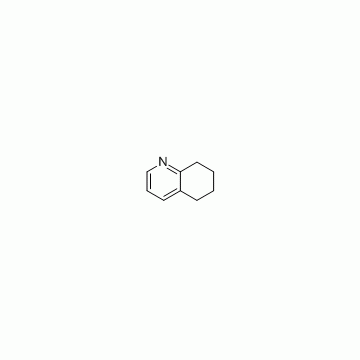
Molecular formula: C9H11N Molecular weight: 133.19 Density: 1,08g/cm3at 25 °C Boiling point: 238°C at 760 mmHg Flashing point: 90 ºC Appearance: colorless or light yellow liquid,has a strong irritating smell. Soluble in ethanol, ethyl ether, acetone and benzene Application : Cefquinome intermediate
*The following content is generated by AI and is for reference only.
2,3-Cyclohexenopyridine is a specialized heterocyclic organic compound characterized by a pyridine ring fused to a cyclohexene moiety. Its molecular formula is C9H9N, and it is identified by the CAS Registry Number 1005-67-4. This chemical structure features a nitrogen-containing aromatic system conjugated with an unsaturated six-membered aliphatic ring, creating unique electronic properties that distinguish it from simple pyridines or cyclohexenes.
Primarily utilized in the field of advanced organic synthesis, 2,3-cyclohexenopyridine serves as a crucial building block for constructing complex pharmaceutical intermediates and functional materials. The presence of both the electron-deficient pyridine nitrogen and the reactive double bond within the cyclohexene ring allows for versatile chemical transformations. Researchers often employ this compound in nucleophilic addition reactions, Diels-Alder cycloadditions, and transition-metal-catalyzed coupling processes to synthesize biologically active scaffolds. Its structural rigidity and specific steric profile make it particularly valuable in medicinal chemistry research aimed at developing novel agrochemicals, dyes, and fine chemicals.
In industrial applications, this substance may be used as a ligand precursor in coordination chemistry or as a model substrate for studying reaction mechanisms involving fused ring systems. While not a commodity chemical found in everyday consumer products, its niche role in laboratory-scale synthesis supports the development of new technologies in material science and drug discovery. Safety protocols for handling 2,3-cyclohexenopyridine generally align with standard procedures for organic solvents and reactive heterocycles, requiring appropriate ventilation and personal protective equipment to prevent inhalation or skin contact. Due to its potential reactivity, storage should be conducted in cool, dry environments away from strong oxidizing agents. As research into nitrogen-containing heterocycles continues to expand, compounds like 2,3-cyclohexenopyridine remain essential tools for chemists seeking to innovate in the creation of next-generation synthetic molecules.




 (All Rights Reserved)
![5,6,7,7a-Tetrahydro thieno[3,2-c]pyridin-2(4H)-one Hydrochloride](https://eimg.pharmasources.com/img_Cphi_en/Product/2016_02/Mimg_1602021058457992.jpg)